How to Choose Healthcare Facility Cleaning Services
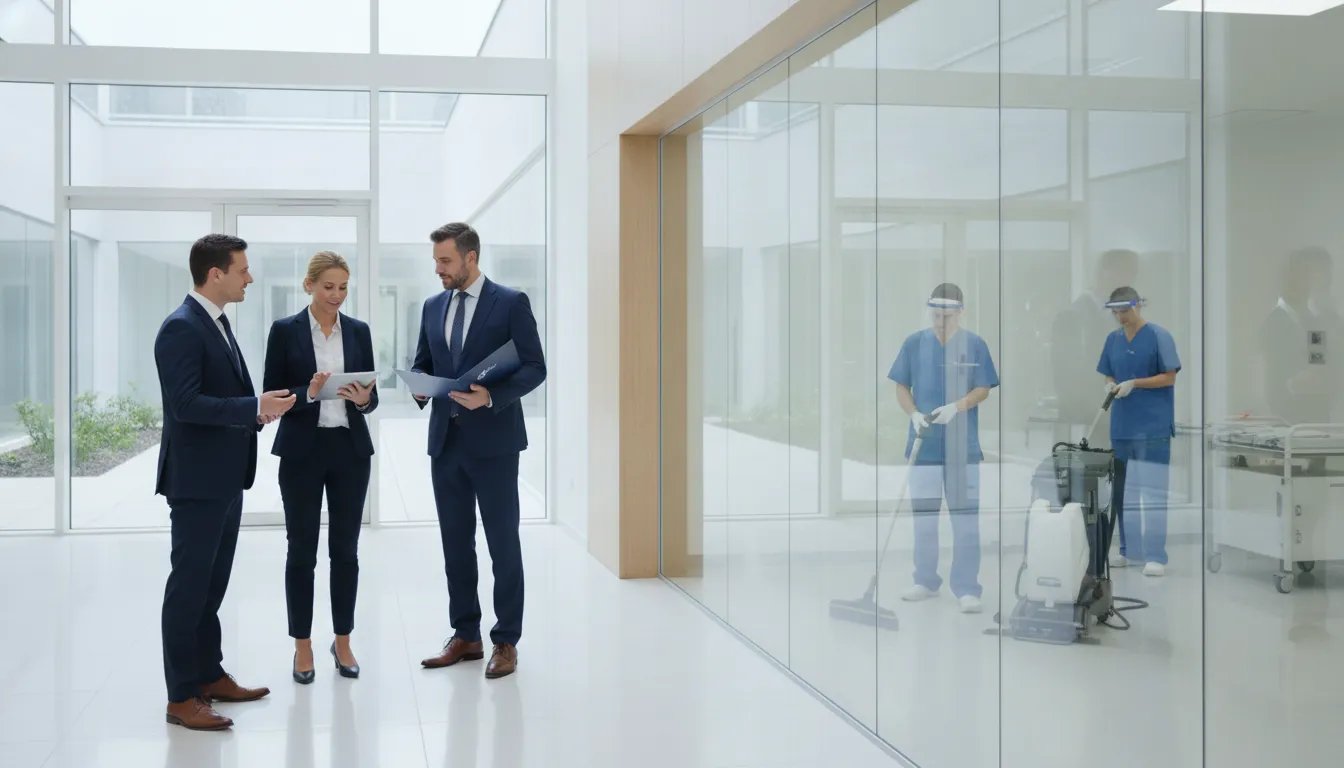
A healthcare cleaning plan should fit the facility, not force the facility into a generic checklist. Exam rooms may need service between appointments, while administrative offices may follow a different schedule. Isolation rooms, laboratories, procedure areas, and patient rooms can require additional training, PPE, documentation, and approval. Professional healthcare facility cleaning services account for these differences from the start. They help define responsibilities, identify exclusions, set response times, and create records for inspections. Before choosing a provider, learn what a thorough scope should cover and how to compare proposals with confidence.
Key Takeaways
- Create a detailed cleaning plan: Divide the facility by risk level, define service frequency, list approved products, and clarify responsibilities for equipment, waste, spills, and restricted rooms.
- Verify provider qualifications: Choose a vetted, insured team with healthcare-specific training in infection prevention, PPE, privacy, chemical safety, isolation procedures, and emergency response.
- Require measurable accountability: Review checklists, audits, response times, staff feedback, and corrective-action records to confirm consistent service and address problems promptly.
Healthcare Facility Cleaning: Scope and Service Types
Healthcare facility cleaning involves much more than wiping down visible surfaces. A professional service should organize its work around patient safety, infection-control procedures, traffic flow, and the risk level of each area. Medical offices, dental clinics, outpatient centers, laboratories, and hospitals may all need different products, schedules, staffing, and documentation.
Before requesting a quote, ask the cleaning provider to walk through the facility and identify clinical areas, shared spaces, restricted rooms, high-touch surfaces, and locations requiring special handling. The CDC’s environmental cleaning guidance recommends adjusting cleaning methods and frequency to the vulnerability of patients and the function of each care area.
A written scope should explain what the cleaning team will do, how often each task will occur, which products and equipment they will use, and what falls outside the service. This level of detail helps your facility maintain consistent standards and reduces confusion when staff need an urgent cleaning response.
Clinical, nonclinical, and restricted areas
Clinical areas are spaces where patients receive care, treatment, examinations, or procedures. Examples include exam rooms, patient rooms, laboratories, infusion areas, operating rooms, and treatment spaces. These areas may require cleaning between patients, carefully sequenced disinfection, and added precautions when a patient has a known or suspected infection.
Nonclinical areas include reception desks, administrative offices, staff lounges, hallways, conference rooms, and other spaces without direct patient care. They still need regular service because patients, visitors, and employees may share door handles, counters, phones, elevator buttons, and light switches.
Restricted areas require special access rules, protective equipment, training, or approval from facility leadership. The cleaning plan should identify who may enter, when cleaning can occur, which products are approved, and how staff will record the work. A qualified provider should never treat restricted rooms like ordinary offices.
Offices, clinics, exam rooms, and treatment spaces
Medical offices and clinics often combine administrative work with patient care, so one schedule may not suit the entire building. Reception and billing areas may need dusting, vacuuming, floor care, waste removal, and disinfection of shared surfaces. Exam rooms and treatment spaces usually need more frequent attention because patients, staff, equipment, and bodily fluids may be present.
The service plan should define the cleaning sequence for each room. Staff may remove waste, clean from higher surfaces to lower ones, disinfect approved surfaces, replace supplies, and inspect the room before it returns to service. Treatment rooms may require cleaning between appointments, at the end of a shift, or after a spill.
The scope should also clarify what the cleaning team may handle and what remains the responsibility of clinical staff. Cleaners generally should not move, disconnect, or operate medical devices without written authorization and role-specific training. Medical and healthcare cleaning services may cover spaces ranging from private practices and patient rooms to surgical suites and common areas.
Patient rooms, waiting areas, restrooms, and offices
Patient rooms need careful attention to bed rails, overbed tables, call buttons, door handles, light switches, chairs, sinks, and other frequently touched surfaces. Restroom service should cover toilets, faucets, grab bars, dispensers, floors, and touchpoints. Staff should also replace liners, restock supplies, and report damaged fixtures or missing equipment.
Waiting areas bring together patients, visitors, and staff, making consistent upkeep especially important. The cleaning schedule may include reception counters, seating arms, clipboards, pens, check-in kiosks, entry doors, and elevator buttons throughout the day. Offices and staff areas may need less frequent service, but shared keyboards, phones, break-room handles, and appliance controls still require attention.
Cleaning frequency should reflect room use and patient risk rather than follow one standard calendar. Jani-King’s healthcare cleaning guidance notes that high-touch surfaces and patient care areas may require service several times a day, while lower-risk spaces may be cleaned daily or weekly.
Routine, deep, terminal, turnover, and spill-response cleaning
Routine cleaning covers the recurring work needed to keep a facility clean and orderly. It may include surface cleaning, disinfection, floor care, restroom service, waste removal, supply restocking, and entryway care. The plan should state which rooms are included, how often each task is completed, and where staff record the work.
Deep cleaning is more detailed and may include baseboards, vents, walls, corners, upholstery, floor edges, and hard-to-reach surfaces. Terminal cleaning takes place after a patient is discharged, transferred, or no longer occupies a room. It prepares the space for the next patient and may cover surfaces missed during routine service.
Turnover cleaning is common in outpatient settings where rooms must be prepared between appointments or procedures. Spill-response cleaning addresses blood, vomit, urine, or other potentially infectious materials. It requires trained staff, suitable PPE, approved products, safe waste handling, and prompt communication with facility leadership. Healthcare cleaning procedures should include written protocols and documentation, not just routine disinfecting.
High-touch surfaces and shared medical equipment
High-touch surfaces should be listed clearly in the cleaning plan. Common examples include door handles, bed rails, light switches, faucet handles, counters, chair arms, call buttons, keyboards, touch screens, and mobile carts. Cleaners should know which surfaces can be treated safely, which products are approved, and which items must be handled by clinical staff.
Shared medical equipment requires additional care because materials, controls, and manufacturer instructions vary. Blood pressure cuffs, examination tables, wheelchairs, patient monitors, and mobile carts may require cleaning between uses. The provider should follow the facility’s approved procedure and the equipment manufacturer’s instructions.
The CDC recommends following manufacturer instructions when cleaning patient-care equipment and environmental surfaces. A cleaning company should document equipment exclusions rather than assume that every device can be cleaned by its staff. This protects equipment and helps prevent gaps in responsibility.
Risk-based schedules, regulated waste, and exclusions
A risk-based schedule assigns cleaning frequency according to patient vulnerability, room function, traffic, and contamination risk. Intensive care areas, isolation rooms, procedure spaces, and pediatric treatment rooms may need more frequent service than administrative offices. The facility’s infection-prevention team should approve the schedule and review it when patient needs or operations change.
Waste handling must be defined before service begins. Ordinary trash, sharps, pharmaceutical waste, laboratory waste, and materials contaminated with blood or other potentially infectious substances may follow different requirements. Cleaning staff should not handle regulated waste without the necessary training, PPE, containers, and authorization. Employers can refer to OSHA’s bloodborne pathogens requirements when developing exposure-control procedures.
The written scope should list exclusions such as sterilization, instrument reprocessing, medication handling, sharps disposal, hazardous-drug cleanup, medical-device maintenance, and laboratory decontamination. Clear exclusions protect patients, staff, and the cleaning company while making quotes more accurate.
Why Healthcare Facilities Need Specialized Cleaning
Healthcare facilities need more than a standard commercial cleaning routine. Patients, visitors, clinicians, and support staff may encounter infectious microorganisms, bodily fluids, contaminated surfaces, and medical waste throughout the day. A specialized cleaning program addresses these risks with trained staff, approved products, written procedures, and schedules based on how each area is used.
The right service also recognizes that cleaning, disinfecting, and sterilizing are different processes. Each one has a specific purpose, and using the wrong product, tool, or contact time can leave a surface unsafe. Cleaning teams should understand the facility’s risk zones, follow documented protocols, and report spills, damaged equipment, isolation rooms, and other concerns promptly.
A reliable healthcare cleaning plan supports the facility’s broader infection-prevention efforts. It should also include clear communication between environmental services staff, clinical teams, infection-prevention personnel, and facility managers.
Preventing infections and protecting patients
A clean healthcare environment supports patient recovery and helps limit the spread of harmful microorganisms. High-touch surfaces, shared equipment, door handles, light switches, waiting-room furniture, and restroom fixtures can transfer contamination between people. These areas require consistent attention, even when they appear clean.
Cleaning schedules should reflect patient volume, surface use, and the risk associated with each space. Teams may need to service treatment areas and frequently touched surfaces more often than administrative offices. Staff should record completed tasks so supervisors can identify missed work and address it quickly.
According to ISSA’s healthcare cleaning guidance, specialized cleaning services may support shorter hospital stays and fewer readmissions when they form part of a wider infection-prevention strategy. Cleaning cannot prevent every infection, but it remains an important part of a safe patient environment.
Cleaning, disinfecting, and sterilizing
Cleaning removes dirt, dust, organic matter, and some microorganisms from a surface. Disinfecting uses a chemical product to destroy many or most disease-causing microorganisms on a cleaned surface. Sterilizing is a specialized process that eliminates all forms of microbial life. It is generally reserved for certain medical instruments and equipment, rather than routine room cleaning.
A cleaning company should never suggest that ordinary janitorial work sterilizes an entire room. Instead, staff should know which surfaces require cleaning, which need disinfection, and which items must be handled by qualified clinical personnel. The CDC’s environmental infection-control recommendations offer a useful framework for healthcare cleaning and disinfection practices.
Written procedures should identify the correct product, dilution, application method, and frequency for each area. They should also explain what to do when a surface cannot safely tolerate the usual chemical or equipment.
Using EPA-registered disinfectants and contact times
Healthcare cleaning teams should use disinfectants registered with the EPA. The selected product should be appropriate for the microorganisms, surfaces, and tasks involved. Its label provides essential instructions, including dilution, required PPE, approved uses, and contact time.
Contact time refers to how long the surface must remain visibly wet for the disinfectant to work as intended. Wiping a product away too soon may reduce its effectiveness. Staff should apply the correct amount and follow the label instead of relying on habit or the way a surface looks.
Facilities should also confirm that products are compatible with flooring, upholstery, electronics, and medical equipment. Chemicals must remain in labeled containers, while safety data sheets should be available to workers. Supervisors can reinforce correct use through demonstrations, direct observations, and documented refresher training.
Using PPE, color-coded tools, and clean-to-dirty workflows
Personal protective equipment helps protect cleaners from chemicals, blood, respiratory secretions, and other potentially infectious materials. Depending on the task, PPE may include gloves, gowns, masks, eye protection, or face shields. Staff should know when to put it on, how to remove it safely, and when to replace it.
Color-coded cloths, mop heads, and buckets help reduce the risk of carrying contamination from one area to another. For example, tools assigned to restrooms should not be used in patient rooms or food-service areas. The facility should define its color system clearly and train every worker to follow it.
A clean-to-dirty workflow generally means starting with cleaner, lower-risk areas before moving to dirtier or higher-risk spaces. Staff should work from high surfaces to low surfaces and from the farthest point of a room toward the exit. These steps should be included in the facility’s written procedures and checked during routine supervision.
Managing isolation areas, bodily fluids, and bloodborne pathogens
Isolation rooms, bodily-fluid spills, and blood-contaminated materials require procedures beyond routine cleaning. Staff should understand contact, droplet, airborne, and other transmission-based precautions before entering a restricted area. They also need clear instructions for PPE, room signage, waste handling, and communication with clinical or infection-prevention personnel.
Blood or bodily-fluid spills should be secured and handled promptly with the appropriate PPE, absorbent materials, disinfectant, and disposal method. Cleaners should never pick up sharps by hand or place them in ordinary waste. Any exposure, injury, splash, or damaged container should be reported through the facility’s incident process.
The OSHA bloodborne pathogens standard outlines employer responsibilities for exposure-control plans, training, PPE, housekeeping, and regulated waste. Facilities should also maintain room logs, waste records, checklists, and incident reports. Clear documentation helps confirm that procedures were followed and gives managers a reliable record for corrective action.
Train and Qualify Healthcare Cleaning Staff
Healthcare cleaning requires more than general housekeeping experience. Cleaning staff may work around vulnerable patients, clinical equipment, bodily fluids, confidential records, and restricted areas. Before choosing a provider, ask how the company trains employees, verifies their skills, and supervises their work after onboarding.
A qualified provider should offer healthcare-specific training, document completed courses, and schedule regular refreshers. The program should cover infection prevention, workplace safety, chemical handling, personal protective equipment, privacy, access control, isolation procedures, and spill response. It should also explain how cleaners communicate with clinical staff and report hazards or incidents.
Training must match the facility’s needs. A small outpatient clinic may have different risks from a hospital, surgical center, dialysis facility, or long-term care setting. Ask whether the company creates a site-specific orientation and assigns cleaners based on their experience and qualifications. ServiceMaster Clean’s healthcare cleaning guidance identifies bloodborne pathogens, PPE, and exposure control plans as key parts of healthcare cleaning preparation.
Teaching infection prevention, OSHA, and bloodborne-pathogen safety
Cleaners should understand how infections spread and how their work helps reduce transmission. Training should cover hand hygiene, standard precautions, cleaning before disinfection, surface contact times, and safe movement through patient-care areas. Staff should also learn how to keep clean supplies separate from used equipment and contaminated materials.
OSHA-related instruction should include bloodborne pathogens, exposure response, and the facility’s exposure control plan. Employees need to know how to handle contaminated materials, respond to splashes or needlestick injuries, report incidents, and seek medical evaluation. Ask whether the provider documents this training and schedules refreshers when procedures, products, or regulations change. OSHA’s bloodborne pathogens standard provides a useful reference for required workplace protections.
Handling chemicals, safety data sheets, PPE, and equipment
Healthcare cleaners must know more than which product to use. They should understand dilution instructions, required contact times, ventilation needs, storage rules, expiration dates, and which chemicals must never be mixed. The company should provide access to current Safety Data Sheets and teach employees how to use them. OSHA’s Hazard Communication resources explain how workers receive information about chemical hazards and protective measures.
Training should cover gloves, gowns, eye protection, masks, and respirators when the task or facility policy requires them. Equipment instruction matters, too. Employees should know how to use vacuums, microfiber systems, floor machines, sprayers, and other tools safely. The provider should explain how equipment is cleaned, disinfected, stored, and moved between areas to reduce cross-contamination.
Following contact, droplet, airborne, and isolation precautions
A cleaning provider should train staff to recognize transmission-based precautions and follow the instructions posted for each room. Contact precautions may require gowns and gloves, while droplet or airborne precautions can involve specific masks, respirators, entry procedures, or limits on equipment brought into the space.
Staff should practice the complete process, including gathering supplies, putting on PPE, cleaning in the correct order, handling waste, removing PPE safely, and performing hand hygiene. They should also know how to move equipment out of an isolation area without spreading contamination. CDC guidance on transmission-based precautions offers a clear framework for contact, droplet, and airborne precautions. Ask how the provider coordinates with nurses or other clinical staff when room instructions are unclear.
Protecting privacy and controlling facility access
Cleaners may enter patient rooms, exam rooms, treatment spaces, offices, and supply areas, so privacy and access control should be part of their qualification process. Staff should know not to discuss patient information, photograph screens or documents, or look through charts, desks, wastebaskets, or personal belongings.
The provider should explain which areas require authorization, badges, escorts, or additional clearance. Written procedures should address lost keys, access cards, unattended records, open computer screens, and suspicious activity. Staff should also know how to pause work and notify a supervisor if they discover sensitive information. HHS guidance on the HIPAA Privacy Rule can help facilities review privacy expectations when outside cleaning staff have access to patient-care areas.
Obtaining CSCT and role-specific credentials where required
Some facilities require credentials beyond general healthcare cleaning training. The Certification Training for Surgical Cleaning Technicians, or CSCT, can prepare employees for the specialized demands of surgical environments, where cleaning order, contamination risks, restricted access, and documentation requirements are especially strict.
Credential requirements vary by facility, role, state, and scope of work. Ask the provider which certifications apply to your setting and whether the assigned employees hold them. You should also confirm whether credentials remain current and whether the company keeps documentation available for review. Jani-King’s healthcare cleaning guidance discusses CSCT training along with chemical safety, PPE, and hazardous-material communication.
Screening, supervising, and refreshing staff training
Qualification should continue after a cleaner is hired. Look for a provider that verifies identity and work history, conducts background checks when required, and confirms that employees are legally permitted to work. Staff should complete a site-specific orientation before working independently, including instruction on facility layout, emergency contacts, restricted areas, infection-control procedures, and reporting requirements.
Supervisors should inspect work regularly, observe cleaning practices, review completion records, and correct problems promptly. Refresher training is important after an incident, product change, failed audit, or updated infection-control procedure. Ask how the company tracks training dates and follows up on missed requirements. Jan-Serve’s healthcare cleaning information emphasizes ongoing education, supervision, and quality assurance inspections as part of consistent healthcare cleaning.
Meet Healthcare Cleaning Compliance Requirements
Healthcare cleaning requires more than a polished appearance. Your cleaning partner should support infection prevention, worker safety, patient privacy, and the documentation your facility needs to demonstrate consistent service. Before signing an agreement, ask how the company turns federal guidance, state and local rules, and your facility’s policies into daily procedures.
A reliable provider should explain who performs each task, which products they use, how results are checked, and what happens when something goes wrong. Clear records help your staff, cleaners, supervisors, and regulatory reviewers understand what was done and whether it met the required standard.
Following OSHA, EPA, CDC, and local health requirements
Healthcare facilities manage patient turnover, treatment areas, high-touch surfaces, bodily fluids, and other risks that do not typically appear in office cleaning. Your provider should understand the difference between routine cleaning, disinfection, spill response, and work in restricted or isolation areas.
Ask whether cleaners follow OSHA bloodborne pathogens requirements, use suitable personal protective equipment, and receive training on exposure prevention. Products should be registered for their intended use by the EPA, and staff should follow the product label, including the required contact time. Procedures should also reflect CDC environmental infection control guidance, as well as applicable state and local health requirements.
Meeting Joint Commission expectations and AHE-aligned practices
Accredited hospitals and other healthcare organizations may need cleaning processes that support Joint Commission expectations and internal infection-control standards. A cleaning company does not replace your compliance team, but it should provide trained staff, clear procedures, and records that fit your quality program.
Ask how the provider aligns its work with recognized environmental services practices, including guidance from the Association for the Health Care Environment. Discuss room-cleaning sequences, isolation-area procedures, high-touch surfaces, equipment handling, and escalation steps for missed work. Your facility may also have specific requirements for audits, documentation, and performance reviews. A strong provider should adapt its service plan to those expectations instead of relying on a generic commercial checklist.
Managing exposure plans, waste, and incident reports
Cleaning staff need clear instructions for blood, bodily fluids, sharps, contaminated materials, and accidental exposures. Before service begins, confirm that the provider has a written exposure-control plan. Staff should know when to stop work, secure an area, notify a supervisor, and contact your facility’s designated representative.
Ask who handles regulated medical waste and whether that work is included in the agreement. General cleaning staff should not collect or transport waste beyond their training, authorization, or equipment. The contract should identify exclusions and explain how cleaners respond to an unknown substance, damaged container, spill, or sharps hazard.
Incident reports should include the date, location, people notified, immediate action, and follow-up. This documentation supports OSHA recordkeeping and reporting responsibilities while giving your team a clear record for review and corrective action.
Maintaining insurance, background checks, and training records
A healthcare cleaning provider should be able to show current general liability and workers’ compensation coverage, along with any additional insurance your facility requires. Request certificates directly from the insurer or ask the provider to authorize verification. Coverage limits should match the size, risk, and access requirements of your facility.
Because cleaners may enter patient rooms, treatment areas, and staff-only spaces, ask how the company screens employees before assignment. Background checks, identity verification, reference checks, and documented supervision can help reduce access and privacy risks. Your contract should also explain what happens when a cleaner leaves the account or loses authorization.
Training records should cover infection prevention, chemical safety, PPE, bloodborne pathogens, equipment use, privacy, and site-specific procedures. Healthcare staff need more than general janitorial instruction, especially when they work around isolation precautions or clinical waste. Review the provider’s healthcare cleaning training guidance and ask how often training is refreshed and documented.
Keeping audit-ready policies, checklists, logs, and corrective actions
A cleaning program is easier to manage when important tasks leave a clear record. Request written policies for routine cleaning, terminal cleaning, spill response, isolation areas, chemical use, PPE, waste handling, and emergency communication. These documents should reflect your facility instead of repeating a general office-cleaning plan.
Daily checklists and completion logs should identify the area, task, date, time, and person responsible. Supervisors should review records rather than treating a signed checklist as proof that every task was completed correctly. Periodic inspections, direct observations, and, where appropriate, environmental testing can help verify performance. ISSA’s healthcare cleaning guidance recommends checking cleaning effectiveness instead of relying on appearance alone.
When a task is missed, the provider should document the issue, correct it promptly, identify the likely cause, and record preventive steps. Ask how corrective actions are assigned, reviewed, and closed. This process helps your facility identify recurring problems and improve service over time.
Choosing safer products and Green Seal options
Disinfectants must be effective for the organisms and surfaces involved, but product selection should also account for worker safety, patient sensitivity, ventilation, material compatibility, and storage. Ask for current safety data sheets, product labels, dilution instructions, contact times, and a list of areas where each chemical is approved.
Some facilities also prefer products with recognized environmental and human-health standards. Green Seal standards cover certain cleaning products and services, but certification does not automatically make a product suitable for every clinical use. Your infection-prevention and facilities teams should approve substitutions before cleaners use them.
Do not allow staff to mix chemicals or transfer products into unlabeled containers. A safer program combines approved products with proper dispensing equipment, ventilation, PPE, training, and regular review. The goal is a cleaning system that protects patients and workers while maintaining effective disinfection.
Measure Healthcare Cleaning Quality
A healthcare cleaning program needs more than a checklist marked “complete.” It should show whether cleaners followed the correct process, reached required surfaces, used products safely, and responded within the agreed timeframe. Start by setting measurable standards for patient rooms, exam rooms, treatment spaces, restrooms, waiting areas, offices, and restricted zones. The CDC’s environmental cleaning guidance recommends clear procedures, suitable products, and consistent implementation across healthcare environments.
Use several verification methods instead of relying on appearance alone. A room may look clean while high-touch surfaces remain contaminated, or a disinfectant may not have stayed wet for its required contact time. Combine inspections, direct observation, objective testing, completion records, and feedback from staff and patients. Reviewing these measures together helps supervisors identify recurring issues, support training, and adjust service plans as patient volume, room use, and infection risks change.
Creating site-specific plans, service levels, and completion logs
Create a cleaning plan around the facility’s layout, services, patient population, and risk zones. Define each task, approved product, cleaning method, frequency, responsible team member, and required completion standard. An administrative office should not follow the same procedure as an exam room, isolation area, or treatment space.
Set service levels for routine cleaning, room turnover, terminal cleaning, spill response, and urgent requests. Record completed work in a paper or digital log that includes the date, time, location, cleaner, and supervisor review. These records make missed tasks easier to identify and help reveal scheduling problems. They also support the CDC’s recommendations for environmental cleaning programs.
Conducting supervisor audits and direct observations
Supervisor audits should assess both the finished space and the cleaning process. A visual inspection can check floors, surfaces, waste containers, restrooms, and other areas against the agreed standard. Direct observation can show whether cleaners use the correct PPE, follow a clean-to-dirty workflow, respect contact times, and change cloths or tools between areas.
Use the same checklist for each audit so results remain comparable. Record the location, issue, severity, responsible person, and correction deadline. Add focused reviews after a complaint, spill, infection-control concern, or procedure change. The ISSA guidance on healthcare cleaning recommends regular checks, including visual inspections and microbiological testing when appropriate.
Using fluorescent markers, ATP testing, and supplemental UV-C controls
Objective testing can reveal whether cleaners reached high-touch surfaces that are easy to overlook. A fluorescent marker placed on selected surfaces before service becomes visible under the appropriate light. If the mark remains afterward, the supervisor has clear evidence that the surface needs review and that the cleaning method or training may require attention.
ATP testing measures organic material on a surface and can help compare results over time. Use it alongside visual checks and process observation, not as a replacement for either one. UV-C equipment may provide an additional control in suitable areas, but it does not replace manual cleaning and disinfection. Follow manufacturer instructions and protect people from exposure. Contec’s cleaning verification guidance covers fluorescent markers, ATP testing, direct observation, and digital inspections.
Tracking completion rates, response times, and service consistency
Track whether scheduled tasks were completed on time and whether urgent requests received a prompt response. Useful measures include completed versus assigned tasks, room turnover times, spill-response times, missed services, re-clean requests, and open corrective actions. Review results by location, shift, service type, and team instead of relying only on a facility-wide average.
Consistency matters as much as speed. One clinic, evening shift, or high-use restroom may experience repeated missed tasks even when overall results appear acceptable. Supervisors should review trends, discuss barriers with cleaning staff, and adjust staffing or frequencies when workloads change. Clear reporting lines should show who receives requests, who handles them, and who approves corrections. The CDC’s healthcare cleaning guidance highlights defined responsibilities and on-site supervision.
Gathering patient and staff feedback
Patients, clinicians, and support staff may notice problems that a scheduled audit misses. Give them a simple way to report concerns about room readiness, odors, overflowing waste, restroom conditions, missed surfaces, or delayed service. Options may include a QR code, service desk form, online request, or direct contact with a supervisor.
Ask specific questions instead of relying on a single satisfaction score. For example, was the room ready when needed, did the cleaner behave respectfully, and was an urgent request handled within the agreed timeframe? Protect patient privacy by collecting only the information needed to investigate the concern.
Review feedback by location and recurring theme. One comment may require a quick correction, while repeated reports from the same area could point to a staffing, training, or scheduling issue. A clean, well-maintained environment also supports patient confidence and a safer care experience, as noted in healthcare cleaning guidance from Anchor World Services.
Handling complaints, corrections, and review cycles
Treat complaints as useful quality information. Log the concern, time, location, service involved, and immediate action taken. A supervisor should assess the risk, notify the appropriate facility contact, and arrange re-cleaning when necessary. Concerns involving bodily fluids, isolation areas, chemical exposure, or possible infection-control failures may require prompt escalation under the facility’s procedures.
After correcting the issue, identify the underlying cause. The problem may involve unclear instructions, unavailable supplies, rushed turnover, inadequate staffing, or a change in room use. Record the corrective action, responsible person, due date, and follow-up result. Recheck the area to confirm the correction worked.
Schedule regular reviews of cleaning plans, audit results, testing data, complaints, response times, and training needs. Maintain records that support infection-control efforts, regulatory compliance, and operational accountability. Janitek’s healthcare cleaning guidance emphasizes documented procedures, quality assurance, staff training, and records that demonstrate consistent service.
Choose Healthcare Facility Cleaning Services
Choosing a healthcare cleaning provider requires more than comparing hourly rates or selecting the first company with an open schedule. The right provider should understand infection prevention, patient privacy, restricted areas, room turnover, and the different risks found throughout a facility.
Start by describing your facility in practical terms: its type, size, patient volume, operating hours, treatment areas, and cleaning priorities. Then ask each provider to explain how its team would address those needs. A company experienced in general office cleaning may not have the training, procedures, or staffing required for an urgent care center, dental practice, surgery center, or hospital.
Review the provider’s written scope of work, training standards, insurance coverage, quality checks, and communication process before signing an agreement. The CDC’s healthcare cleaning procedures can also help you compare a company’s proposed methods with established cleaning and disinfection practices.
Match experience to facility type, patient volume, and risk zones
Ask whether the provider has cleaned facilities similar to yours. A small clinic, dental office, assisted living community, and hospital each have different layouts, patient populations, and service requirements. The company should understand the difference between reception areas, exam rooms, treatment spaces, isolation areas, restrooms, staff offices, and restricted zones.
Patient volume also affects the cleaning plan. A busy clinic may need repeated attention to exam tables, counters, door handles, waiting areas, and other high-touch surfaces throughout the day. Ask how the provider adjusts staffing and cleaning frequency during peak appointments, seasonal illness, outbreaks, or unexpected changes in patient volume. A site-specific plan is more useful than a generic checklist.
Verify vetted, insured, and supervised cleaners
Ask how cleaners are screened before entering your facility. Background checks, identity verification, employment references, and documented onboarding can help protect patients, employees, visitors, and sensitive information. Each cleaner should receive healthcare-specific training before working independently, with refresher training provided when procedures or products change.
Request proof of general liability and workers’ compensation insurance, along with any additional coverage your facility requires. You should also know who supervises the team, how often inspections occur, and how missed tasks are corrected. Guidance on choosing hospital cleaning services emphasizes the importance of properly trained, vetted staff who can follow healthcare requirements.
Review credentials, procedures, references, and performance records
A reputable provider should explain its cleaning and disinfection procedures in clear language. Request sample checklists, product lists, safety instructions, quality assurance forms, and escalation procedures. These materials should identify what gets cleaned, how often it is serviced, which products are used, and how workers record completion.
Ask for references from facilities with similar cleaning needs. Contact those references to ask about reliability, response times, staff conduct, and consistency. You can also request examples of inspection results or corrective-action records with confidential information removed. Documented procedures and regular quality checks help support infection-control efforts and accountability, as described in this healthcare cleaning guidance.
Confirm schedules, access controls, privacy, and service continuity
Agree on cleaning frequencies before service begins. The schedule should account for patient vulnerability, room turnover, high-touch surfaces, operating hours, and areas that require cleaning between appointments. Clarify how the team handles occupied rooms, last-minute appointments, bodily fluid spills, isolation areas, and urgent requests.
Access controls require careful planning. Ask whether cleaners receive badges, keys, or entry codes, how access is logged, and what happens if credentials are lost. Confirm that staff understand privacy expectations and will not photograph, discuss, or remove patient information. It is also important to ask about backup staffing, holiday coverage, supply shortages, and severe weather so service can continue with minimal disruption.
Compare communication, online booking, and service guarantees
Clear communication helps your team address missed tasks and urgent needs quickly. Identify your primary contact, expected response times, after-hours procedures, and the process for submitting a complaint or special request. A shared service log, online portal, or email summary can make follow-up easier and provide a record of completed work.
Online booking may simplify recurring visits, deep cleans, and add-on services, but convenience should not replace proper oversight. Review cancellation terms, inspection procedures, re-clean policies, and service guarantees before signing. A spotless guarantee is most useful when it explains what qualifies for a correction, how quickly the provider responds, and which services or situations are excluded. Ask for these details in writing so your facility team knows exactly what to expect.
Questions to Ask Before Requesting a Custom Quote
A healthcare cleaning quote should reflect more than your facility’s square footage. Patient volume, treatment areas, infection risks, cleaning frequency, supplies, documentation, and urgent response needs all affect the scope and price. Asking detailed questions before requesting a quote helps you compare providers fairly and avoid unexpected charges.
Ask about healthcare settings, risk zones, and infection-control experience
Begin by asking whether the cleaning company has experience with facilities like yours. A dental office, outpatient clinic, assisted living community, and hospital each have different traffic patterns, treatment areas, patient needs, and risk zones.
Ask how the provider separates clinical, administrative, and restricted spaces. Find out how often staff clean high-touch surfaces, shared equipment, exam rooms, waiting areas, and restrooms. The CDC’s environmental cleaning guidance explains why high-touch surfaces need more frequent and thorough attention than low-touch areas.
Request examples of similar facilities the company serves, along with references when available. An experienced provider should explain its process clearly and adjust the scope to your facility instead of offering a generic checklist.
Confirm staff training, certifications, screening, and supervision
Ask how cleaners are trained before entering a healthcare facility. Training should cover infection prevention, bloodborne pathogens, chemical safety, PPE, isolation precautions, equipment use, and privacy expectations. Depending on the setting and duties, staff may also need role-specific credentials, such as a Certified Surgical Cleaning Technician qualification.
Ask whether employees complete background checks, identity verification, and reference checks. You should also know who supervises the team, how often inspections take place, and what happens when a cleaner misses a task.
Healthcare cleaning staff need training in general commercial cleaning and facility-specific protocols. Stathakis’ guidance on medical cleaning services recommends confirming a provider’s training, experience, and oversight before hiring.
Review products, PPE, equipment, contact times, and instructions
Ask which disinfectants the company uses and whether they are suitable for the surfaces and pathogens in your facility. Confirm that products are EPA-registered when required, stored safely, and used according to label instructions. A disinfectant only works as intended when the surface remains wet for its required contact time.
Request details about microfiber cloths, mop systems, vacuums, electrostatic sprayers, PPE, and other equipment. Ask whether tools are color-coded or separated between clean and contaminated areas. The provider should explain how staff follow clean-to-dirty workflows and prevent cross-contamination.
A dependable service should provide written procedures, product information, and safety data sheets. Janitek’s healthcare cleaning guidance explains why effective programs require trained workers, detailed procedures, documentation, and medical-specific protocols.
Ask about isolation rooms, spills, urgent requests, and regulated waste
Your quote should explain how the team handles situations that fall outside routine cleaning. Ask whether cleaners can service isolation rooms and respond to blood or bodily fluid spills. Confirm that staff understand contact, droplet, and airborne precautions and receive bloodborne-pathogen training.
Ask how the company handles urgent requests, after-hours incidents, sharps, and regulated medical waste. Some providers clean around waste containers but do not transport or dispose of regulated materials. Make sure these responsibilities are clearly defined in writing.
Also ask how cleaning frequency changes in higher-risk areas. The CDC recommends more rigorous cleaning for high-touch surfaces, such as bed rails, than for low-touch surfaces such as walls. Your quote should reflect these different requirements.
Confirm documentation, audits, incident escalation, and communication
Ask what records you will receive after each service. Useful documentation may include completed checklists, room logs, supply records, inspection results, corrective actions, and incident reports. These records help your team confirm that work was completed and identify recurring concerns.
Find out whether supervisors conduct routine audits or direct observations. Ask how the provider handles missed tasks, patient or staff complaints, exposure incidents, and repeated quality issues. You should know who to contact, how quickly they will respond, and how corrections are recorded.
Clear communication matters when schedules change or an urgent request affects the cleaning plan. Ask whether you will have a dedicated contact and how updates are shared. Healthcare cleaning guidance from Janitek highlights the value of records that support infection control, compliance, and accountability.
Verify insurance, service continuity, and compliance records
Before requesting a final quote, ask for proof of general liability insurance, workers’ compensation coverage, and any other policies your facility or local regulations require. Confirm that coverage remains active throughout the contract, and ask whether subcontractors carry the same protection.
Request evidence of relevant training, background checks, written safety procedures, and compliance records. You should also ask how the company handles employee absences, emergencies, supply shortages, and staff turnover. A backup plan can prevent service gaps when your facility still needs regular cleaning.
Ask how the provider protects restricted areas, keys, access codes, and patient information. Anchor World Services’ guidance on hospital cleaning services recommends checking a provider’s ability to meet healthcare regulations before making a decision. A vetted, insured, and supervised team gives you a stronger foundation for requesting a detailed quote.
Build a Customized Healthcare Cleaning Quote
A healthcare cleaning quote should reflect the facility, the people who use it, and the level of risk in each area. A small outpatient clinic with several exam rooms requires a different plan from a hospital with isolation rooms, high patient volume, and activity throughout the day. A detailed quote gives you a clearer way to compare providers and helps prevent unexpected charges.
Before requesting a quote, gather information about the building, patient volume, cleaning schedule, access requirements, and documentation needs. The CDC’s environmental cleaning procedures explain that cleaning frequency should match the risk and use of each area. Sharing these details allows a provider to recommend suitable staffing, supplies, equipment, and response times.
Ask for the proposal in writing, with routine services and additional charges listed separately. It should explain what the cleaners will do, when they will do it, which products and equipment they will use, and how quality will be checked. This level of detail makes it easier to identify gaps before service begins.
Share facility size, layout, patient volume, and risk zones
Start with the facility’s square footage, number of floors, entrances, restrooms, treatment rooms, and shared spaces. Provide a floor plan if possible. The layout affects travel time, supply placement, equipment requirements, and how cleaners separate clean and soiled materials.
Include average patient volume, busy periods, operating hours, and any expected seasonal changes. A busy urgent care center may need more frequent high-touch disinfection than a quiet administrative office. Identify risk zones such as procedure rooms, isolation areas, laboratories, imaging rooms, pharmacies, and locations where bodily fluid spills may occur. Sharing accurate details helps the provider plan around actual conditions rather than relying only on a basic price per square foot. Facility size and layout can directly affect resource allocation.
Account for labor, supplies, equipment, PPE, and disinfectants
A useful quote should show what is included, rather than listing only a number of labor hours or rooms. Ask whether the price covers trained cleaners, supervision, transportation, microfiber tools, waste liners, gloves, gowns, masks, eye protection, and other required PPE.
Confirm which disinfectants the provider will use and whether they are suitable for the facility’s surfaces and infection risks. The proposal should address dilution, contact times, replenishment, and safe product storage. Ask whether the company supplies equipment such as HEPA vacuums, floor machines, spill-response kits, or sprayers, and who is responsible for maintenance.
A healthcare cleaning plan also needs written procedures and records. Healthcare cleaning best practices emphasize trained staff, clear protocols, documentation, and procedures designed for medical settings.
Price one-time, recurring, deep, terminal, turnover, and add-on services
Request separate prices for each service you may need. One-time cleaning can cover construction dust, a move-in, a renovation, or a change in ownership. Recurring cleaning covers routine work performed daily, weekly, or on another agreed schedule.
Deep cleaning may include hard-to-reach surfaces, detailed restroom work, floor care, and areas not addressed during regular visits. Terminal cleaning involves thorough cleaning and disinfection after a patient leaves a room, when infection-control procedures require it. Turnover cleaning may apply to exam rooms, treatment spaces, or patient rooms between occupants.
Ask for separate rates for urgent spill response, carpet extraction, window cleaning, regulated waste handling, supply restocking, and after-hours work. A service-by-service breakdown makes it easier to adjust the plan without replacing the entire agreement.
Set frequencies, staffing, schedules, and response times
The quote should state how often each area will be cleaned and how many staff members will be assigned. A restroom, waiting room, exam room, and storage area may each require a different schedule. High-touch surfaces and shared equipment often need attention more frequently than low-use offices.
Agree on cleaning times that support patient care and avoid interfering with procedures. Include start and completion windows, weekend and holiday coverage, and the process for requesting service outside regular hours. For urgent needs, specify the expected response time and identify who receives the request.
Ask whether a supervisor will be on site, how absences will be covered, and what happens when patient volume increases suddenly. The CDC’s cleaning guidance supports schedules based on the risk level of each area. Your quote should turn that principle into a practical staffing plan.
Define scope, exclusions, change orders, and re-clean policies
A strong quote should explain exactly what cleaners will do in each area. List surfaces, fixtures, floors, waste containers, high-touch points, shared equipment, and restocking duties. If facility staff must clean medical devices, move furniture, or prepare rooms before service, state that clearly.
Review exclusions carefully. Some providers may not handle sharps, hazardous drugs, biohazard waste, laundry, exterior windows, or clinical equipment unless those services are added separately. Confirm who supplies specialty containers and who manages disposal.
Ask how the provider handles changes after a renovation, room conversion, patient-volume increase, or new isolation requirement. Define when a change order is needed, which charges apply, and who must approve it. Include a re-clean policy that states how quickly missed or incomplete work will be corrected and how the correction will be documented. Keeping these records supports infection-control efforts and operational accountability, as described in healthcare cleaning guidance.
Outline reporting, renewal terms, and the spotless guarantee
Your quote should describe the reports you will receive and how often they will arrive. Common records include completed cleaning checklists, supervisor inspections, supply reports, incident notes, response times, and corrective-action records. Ask whether documents are available online and which members of your team can view them.
Clarify the contract length, renewal date, notice period, price adjustments, and process for changing the scope. If the provider offers a spotless guarantee, review its terms carefully. Confirm which services it covers, how to report an issue, the response window, and whether a return visit is included at no additional cost.
Ask how the company reviews inspection results and shares them with your team. Healthcare cleaning quality guidance points to audits and inspections as useful ways to check service quality and support compliance. Clear reporting gives you a record of completed work and a practical way to address concerns.
Frequently Asked Questions
What should healthcare facility cleaning services include? A healthcare cleaning plan should cover routine cleaning, disinfection, high-touch surfaces, restrooms, waste removal, floor care, room turnover, and spill response where applicable. The written scope should also identify cleaning frequencies, approved products, equipment responsibilities, documentation, and exclusions.
How is healthcare cleaning different from standard commercial cleaning? Healthcare cleaning accounts for patient safety, infection-control procedures, bodily fluids, restricted areas, medical equipment, and different risk levels throughout the facility. Staff need healthcare-specific training and must follow documented procedures for PPE, disinfectant contact times, isolation rooms, privacy, and waste handling.
What qualifications should healthcare cleaners have? Cleaners should receive training in infection prevention, bloodborne pathogens, chemical safety, PPE, isolation precautions, equipment handling, privacy, and emergency reporting. Depending on the setting, certain duties may also require specialized credentials, background checks, site-specific orientation, and ongoing supervision.
How can a facility check whether cleaning services are effective? Use a combination of supervisor inspections, direct observations, completion logs, staff feedback, and objective methods such as fluorescent markers or ATP testing when appropriate. Review missed tasks, response times, complaints, and corrective actions to identify recurring service problems.
What should be included in a healthcare cleaning quote? A detailed quote should list the facility areas, service frequencies, staffing, products, PPE, equipment, response times, documentation, and quality checks. It should also separate recurring, deep, terminal, turnover, and emergency services, while clearly stating exclusions, re-clean policies, insurance coverage, and the terms of any spotless guarantee.