Event Cleaning Service: How to Plan a Guest-Ready Venue
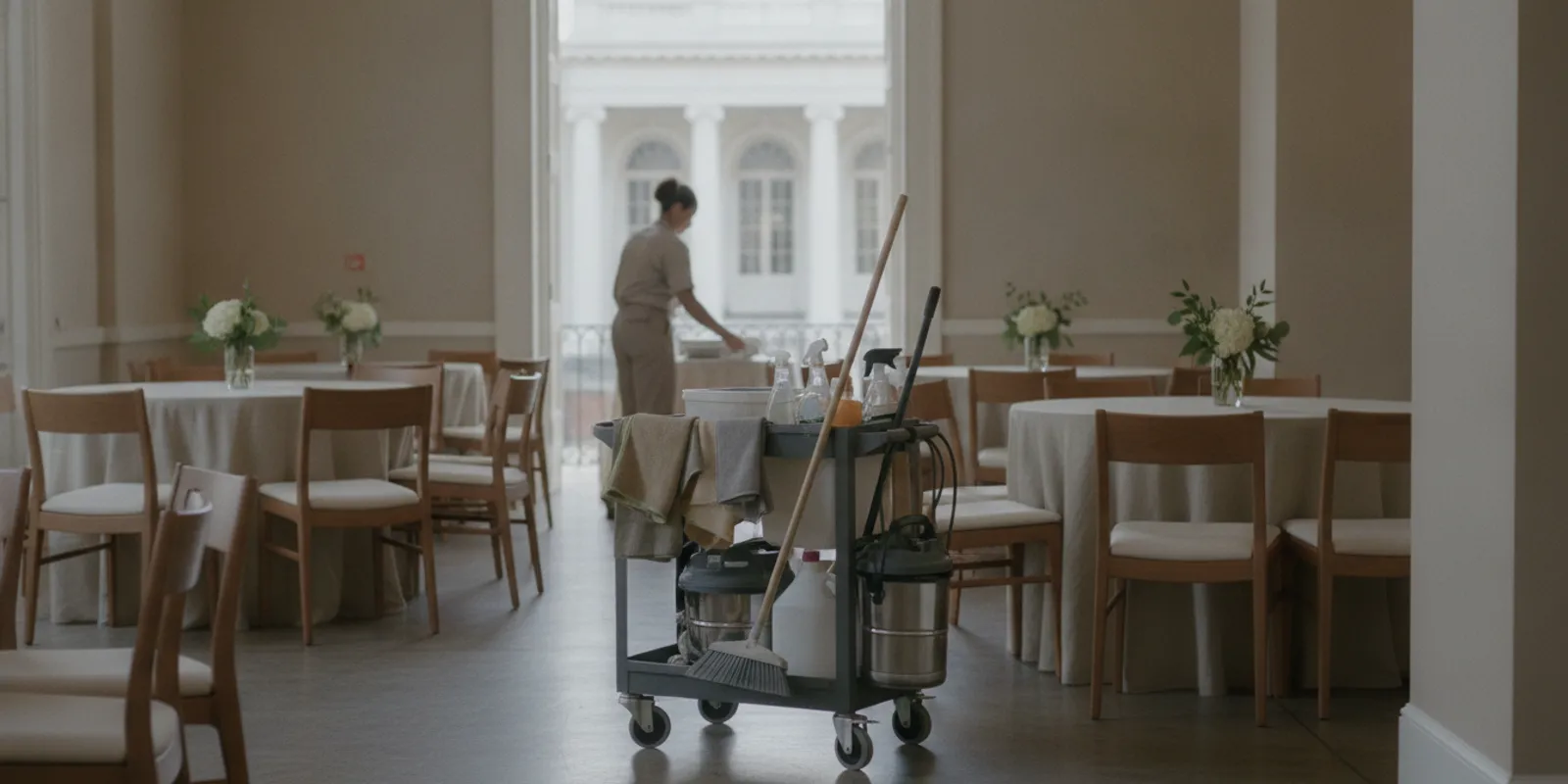
An event cleaning service can help keep a venue orderly before guests arrive, manage high-use areas during a gathering, and reset the space afterward. The right plan depends on the event schedule, the venue's rules, the number and movement of guests, and what the cleaning team is actually being asked to handle. Start by mapping the work to the event timeline, then confirm the scope in writing before you book.
Request cleaning service information
What does an event cleaning service need to cover?
Event cleaning is not simply a standard office cleaning visit moved to a different room. A gathering creates a changing pattern of use: guests arrive in a short window, move between spaces, use restrooms, set down food and drinks, and leave at roughly the same time. Cleaning needs to fit that pattern. A venue may need a clean before setup, attention to selected areas while guests are present, a thorough reset after the event, or some combination of those stages.
Do not assume every provider offers a packaged event service or that one booking includes all three stages. Ask what tasks can be accommodated and whether the timing, venue access, and scope are workable. Crystal Clean Collective LLC provides home and commercial cleaning in the DMV region, including deep cleaning and move-in/move-out cleaning. Event organizers should describe their venue and requirements when requesting information, then confirm any event-related scope before making plans around it.
A practical scope usually identifies:
- Spaces: the rooms and shared areas that need attention, such as an entrance, event room, hallway, or restroom.
- Timing: when the cleaner can enter, when guests arrive, when the event ends, and when the venue must be ready for its next use.
- Tasks: what should be cleaned or collected, and what is outside the request.
- Access: how staff enter, where supplies may be staged, and who can answer questions on site.
- Responsibilities: which tasks belong to the venue, caterer, event staff, or cleaning provider.
Making these decisions in advance reduces uncertainty. It also makes it easier to compare proposals that otherwise may use the same general label while including different work.
Think of the scope as a handoff document, not a wish list. For example, “clean the hall” leaves questions about the adjoining corridor, entry mats, restrooms, and whether waste should be removed. “After the 6 p.m. reception, collect loose event waste in the main room, address the agreed restroom and entry areas, and leave furniture in the venue's marked layout” is easier to confirm. The second description still needs provider and venue approval, but it gives everyone a shared starting point. If a detail is unknown, mark it as pending and assign someone to confirm it.
How is event cleaning different from routine commercial cleaning?
Routine commercial cleaning generally follows a repeating schedule and a familiar floor plan. Event cleaning has to respond to a specific date, a defined access window, a guest-facing setup, and a transition from one condition to another. An office may be cleaned after most staff have left. An event room may need to be ready by a fixed opening time, checked while people are using it, and cleared before a venue handoff.
That does not mean event work is automatically more intensive in every area. A small seated meeting may generate little waste, while a larger reception may produce more frequent restroom and entry needs. The event's actual use matters more than the word “event.” Give the provider a realistic description rather than relying only on the event name.
For example, two gatherings in the same hall can require different plans:
- A daytime seminar with assigned seats may need a pre-event check of the room and restrooms, plus a post-event pickup and floor reset.
- An evening reception with food service may call for closer attention to entrances, shared surfaces, restrooms, and visible debris while the venue is occupied, along with a defined closing reset.
- A multi-day conference may need a daily room reset and waste plan, not just one cleaning visit after the final session.
Routine office cleaning can still be relevant for a workplace hosting a meeting or reception. Review the existing service scope and ask what changes are needed for the event. Crystal Clean DMV's commercial cleaning information is a place to begin a commercial inquiry, but the event date, site, schedule, and requested tasks should be discussed directly. Do not assume that a recurring office plan covers event-specific work.
The difference is especially clear when you compare the planned work cycle. An office plan might specify recurring visits to familiar spaces at an agreed frequency. For an event, the critical question is often whether the team can enter at the right moment, complete a defined list before doors open, return at a later agreed time, or work around other vendors. A recurring service can be a useful point of reference, but it should not replace an event-specific walkthrough of timing, access, guest flow, and handback expectations.
What should you assess before requesting event cleaning?
Walk through the venue as an organizer would, then consider how guests and vendors will use it. If you cannot visit in person, use a floor plan or ask the site contact for details. A short assessment is more useful than guessing from the room's capacity alone.
Which spaces will guests and vendors use?
List each area that is part of the event footprint. Include the main room, registration or welcome area, corridors, restrooms, and any shared space through which guests will pass. Note spaces that are off limits. If the event uses multiple floors or a separate reception area, identify those distinctions clearly.
Also ask whether other events or tenants will use the same common areas. The venue may control shared lobbies, elevators, loading areas, or restrooms. A cleaning request should not presume access or responsibility for a space simply because guests may pass through it.
A simple floor-plan markup can make this conversation concrete. Use one color to show areas included in the request, another for venue-managed or shared spaces, and a third for areas that are off limits. Add the path from the entrance to the event room and mark any route vendors will use. This helps spot a mismatch, such as assuming a shared lobby is included or forgetting the corridor between two booked rooms. Send the map with a short legend; do not rely on colors alone if the plan may be printed in black and white.
What is the event schedule, including setup and breakdown?
Record the time the cleaning team can access the space, not just the advertised start and end times. A room may be occupied by another group until shortly before setup. Vendors may need to enter before the guest arrival window, and the venue may require the room to be cleared by a specified time. Include setup, doors opening, program start, breaks, guest departure, breakdown, and the final handoff.
Be candid about tight transitions. If a room is only available for a narrow window, ask whether the proposed work can realistically fit. Do not treat the event end time as the end of cleaning access. Confirm whether the building remains open, whether a staff member must escort the cleaner, and whether a late finish changes the practical arrangements.
Build a timeline with both fixed and flexible moments. Doors opening and a scheduled program are usually fixed; vendor arrival or breakdown may have a range. Put the cleaning access window beside those commitments rather than in a separate note. For example, if a room is available for setup at 3 p.m., doors open at 6 p.m., and a caterer is still arranging service stations until 5:30 p.m., the available window for a final floor or surface check is not the entire three hours. Ask which tasks can happen before setup, which need to wait until vendors finish, and which are not realistic in that interval.
What will happen in the room?
Describe the event format and likely sources of mess: food and drink, registration materials, presentations, crafts, demonstrations, or outdoor-to-indoor traffic. Mention whether guests will be seated, standing, moving between rooms, or using the venue for an extended period. This context helps a provider ask useful follow-up questions.
A practical example is a training session with coffee service and two scheduled breaks. The room may be relatively quiet during presentations, while the break area and hallway see bursts of traffic. A registration table may collect paper and packaging as people arrive. Instead of requesting equal attention everywhere, describe the busy moments and ask whether the agreed scope can prioritize those specific spaces. For a family celebration with children moving between an indoor room and an outdoor area, discuss the entrance path and any venue rules for floor protection or moisture. The point is not to predict every spill; it is to identify where activity is likely to concentrate.
Avoid unsupported precision. If you do not know the final attendance or layout, share the current estimate and when it will be confirmed. If attendance changes substantially, revisit the cleaning plan rather than assuming the original request still fits.
What venue rules affect cleaning?
Check the venue agreement or ask the site manager about approved cleaning products, waste handling, floor-care restrictions, storage, keys, security, loading access, and the use of service elevators. Find out whether the venue supplies bags or other materials, and where filled bags should go. Ask whether food waste, recycling, and general trash must be separated.
Clarify who is authorized to approve work in each space. For a rented venue, the organizer may not control building operations. Get permission before asking a provider to move furniture, enter a restricted room, handle equipment, or work around a vendor's setup.
Ask for instructions in practical terms. “Use the service entrance” should be accompanied by the entrance location, access hours, and the person who can grant entry. “Follow the waste rules” should identify the disposal point and whether sorting is required. If the venue has a written checklist, request it early and share the relevant portions with the cleaner and event lead. This is particularly helpful when the person arranging cleaning is not the same person who will open the building or oversee the event.
How should you plan cleaning before guests arrive?
Pre-event cleaning is about presenting the agreed spaces in a ready condition and resolving issues before they become a guest-facing problem. It should be coordinated with venue setup, deliveries, and other vendors. A room cleaned too early may be disturbed by later work; a room cleaned too late may delay the opening.
Start with a priority list rather than a vague request to “make everything guest-ready.” Depending on the agreed scope and venue rules, the organizer may ask about:
- Removing visible dust or debris from the identified guest areas.
- Checking floors and entrance areas for dirt brought in during setup.
- Preparing restrooms for use and confirming that the venue's supplies are in place.
- Wiping agreed, reachable surfaces that guests are likely to use.
- Checking that walkways are clear after tables, chairs, signs, and equipment are arranged.
- Collecting setup packaging or empty containers when this task has been assigned to the cleaning team.
These are planning prompts, not a promise that every task is included in every service. State which items matter most, and ask the provider to confirm what can be done. A request to clean the whole venue may be too broad if only a few rooms are rented or if other areas are controlled by the building.
Coordinate the sequence with the event lead. For instance, the cleaner may need to finish the room before the decorator places materials or the caterer sets tables. If vendors are still moving equipment through the entrance, an early floor check may need a later follow-up. Identify the person who will say that setup is complete and the area is available.
Before guests enter, use a brief walkthrough to confirm that the planned spaces appear ready. This is not a substitute for the cleaner's agreed work; it is a way to spot a last-minute venue issue, such as an unexpected spill, blocked route, or missing restroom supply, and route it to the right person.
It can help to assign a single event lead to this final check and give that person a short, written sequence. First, confirm that the rooms on the scope are accessible. Next, look at the guest route from entry to event space, then review the areas specifically named as priorities, such as restrooms or a refreshment point. Finally, confirm that vendors have finished work that could undo the cleaning. If a concern appears, record the location and contact the person responsible rather than quietly expanding the cleaner's task list. This process keeps the check focused and gives enough time to resolve issues before doors open.
Which areas need attention while an event is in progress?
Some events need only a pre-event clean and a post-event reset. Others benefit from a defined check during the gathering. Decide based on guest flow, event length, venue expectations, and the cleaning support that has been confirmed. Avoid assuming that a cleaner will remain on site or respond throughout an event unless that arrangement has been explicitly agreed.
When planning any during-event attention, focus on the areas where conditions change fastest:
- Entrance and registration: these areas receive concentrated traffic as guests arrive. Loose paper, packaging, or debris may collect near the entry.
- Restrooms: usage can rise during arrival periods and breaks. Ask what check frequency is feasible and who will report a supply or maintenance issue.
- Food and drink areas: spills or waste can appear around refreshment stations. Coordinate with catering staff so cleaning responsibilities do not overlap or conflict.
- Walkways: keep attention on the routes guests actually use, especially where traffic moves between rooms.
- Shared touchpoints: decide whether particular surfaces need attention and how that work can take place without interrupting guests.
Plan for unobtrusive work. Establish which areas can be accessed, whether cleaning should happen during scheduled breaks, and how the cleaner will coordinate with an event contact. If a task could disturb a presentation or create a hazard in a busy passage, agree on a safer time or an alternative.
Make a clear distinction between cleaning and venue operations. A cleaner may not be responsible for monitoring guests, managing vendors, restocking venue-owned supplies, handling food, or responding to building maintenance problems. Assign each issue to a named role. This prevents a small spill, an empty dispenser, or a full waste container from becoming an unanswered request.
If the gathering includes breaks, use them as planning checkpoints. The event lead can identify when a room will be empty, whether the next session begins immediately, and whether a particular task should wait until guests have left. For a reception without formal breaks, coordinate around natural lulls, such as the transition from arrivals to a seated program. If no suitable opening exists, agree beforehand that certain areas will be addressed only after the event. Clear limits are more workable than asking someone to clean around guests without a defined method or safe access.
Use a simple communication plan for issues that arise during the event. Decide who may request an adjustment, how to reach that person, and what details to provide: the exact room, the issue, whether guests are nearby, and whether the area is safe to enter. Do not direct multiple vendors to the same problem at once. For instance, a spill near a food station might involve the caterer, venue, and cleaning provider, but only the assigned contact should coordinate the response. This prevents conflicting instructions and helps the person responsible understand whether the task falls within the confirmed scope.
How can you organize post-event cleanup and turnover?
Post-event cleaning begins with a clear handoff. Decide when guests are expected to leave, when vendors will finish breakdown, which items must be removed by the organizer, and when the cleaner can safely enter each area. A room full of equipment and vendor staff is not ready for a full reset, even if the public program has ended.
Write down the condition the venue expects at handback. Depending on the agreement, that could mean removing event-related waste, clearing visible debris, returning furniture to a specified layout, or leaving the space in another agreed condition. Do not assume the cleaning provider is responsible for packing decorations, moving heavy furniture, dismantling equipment, or removing property that belongs to a vendor.
A useful post-event sequence might be:
- Close the guest areas. The event lead confirms that guests have left and identifies any areas still in use.
- Coordinate vendor breakdown. Confirm which vendors are still working and when their work areas will be available.
- Separate belongings from waste. The event team identifies items to keep, return, or remove so they are not mistaken for rubbish.
- Complete the agreed reset. The cleaning provider follows the confirmed task list for the spaces it can access.
- Walk through the venue. The organizer or authorized venue contact checks the agreed handback points and reports any unresolved concern promptly.
If the venue must be ready for another group soon after, build the next group's access time into the plan. A same-night turnover may require a different sequence from a venue that can remain closed overnight. Ask about realistic access and completion timing before promising a handoff to the next user.
For a multi-day event, treat each day as its own cycle. Establish how waste is handled overnight, what rooms need a reset between sessions, and who can authorize changes if attendance or the schedule shifts. A single end-of-event cleanup may not address daily use or the venue's operating requirements.
For example, a conference might use a main room for morning sessions, smaller rooms for afternoon workshops, and a reception area in the evening. The organizer can note each room's last use, the time vendors need to remove materials, and when the cleaning team may enter. A room that is free at 4 p.m. is not necessarily available if a presenter is packing equipment until 4:30. Confirm the actual handoff point with the vendor or room lead. If access slips, identify which areas have priority and who can approve a change to the work order or timing.
Protect the distinction between cleaning waste and unclaimed property. At the end of a busy event, a bag, sign, cable, or display item may look like something to discard but belong to a guest or vendor. Agree on a holding spot for found items and a method for tagging them, if the venue has one. Tell the cleaner what must not be moved or discarded. The event team should handle valuables, confidential materials, and equipment rather than leaving those judgments to the cleaning crew.
What should you include in an event cleaning scope?
A useful scope is specific enough for both sides to understand what will happen, but not so elaborate that it becomes difficult to update. The details below can form a short request for information. Confirm the final version with the provider and venue.
- Event and venue: event type, building name or general site details, and the rooms included.
- Date and access: event date, cleaning access windows, guest arrival and departure times, and the required handback time.
- Attendance and layout: estimated guest count, seating or standing format, room arrangement, and any changes still pending.
- Service stage: before the event, during the event, after the event, or specified combinations.
- Task list: the requested areas and actions, with high-priority items identified.
- Waste instructions: what may be discarded, what must be separated, and the venue's designated disposal location.
- Access and contact: entry procedure, escort requirements, onsite point of contact, and a backup contact.
- Boundaries: areas not included, vendor responsibilities, restricted items, and work that requires prior approval.
- Change process: who can approve a scope or schedule adjustment and how the change will be confirmed.
Keep a copy of the confirmed scope where the event lead and site contact can find it. If a schedule or room changes, send the update to the relevant parties instead of relying on a verbal message passed between vendors.
One way to make the scope usable is to divide it into three columns: “requested,” “confirmed,” and “owner if not included.” A task such as “restroom check before opening” may be requested, then confirmed with a time and access detail. “Remove catering equipment” may be assigned to the caterer if it is outside the cleaning scope. This small distinction stops assumptions from being mistaken for commitments. When a task remains undecided, leave it visibly open and set a deadline for resolving it.
For a larger event, add a room-by-room sequence rather than a long general list. For each room, name its primary use, the moment it becomes available, the priority tasks, and the person who releases it. The event room could be ready for cleaning at one time while a green room or registration area remains occupied. Room-level details help the provider understand the real work without implying that every part of the building is included.
What questions should you ask a cleaning provider?
Asking specific questions helps you establish whether a provider can accommodate the request without relying on assumptions. You do not need to know every operational detail before you ask for information. You do need to share enough about the event for the provider to respond meaningfully.
- Can you consider the requested venue, date, and access window?
- Which of the requested rooms and tasks can you include?
- Do you offer a pre-event visit, during-event attention, post-event cleaning, or only some of those options?
- Will one cleaner or a team be assigned, and how will the onsite contact reach the person responsible?
- What needs to be ready before the cleaning team arrives?
- Which venue restrictions or product requirements should we confirm in advance?
- How should we handle event waste, recycling, lost property, and items that must not be discarded?
- What happens if the event schedule, attendance, or access window changes?
- How do we document the agreed scope and any additional requests?
- What should we do if a problem is found during the final walkthrough?
Ask for clear limits as well as capabilities. If the provider cannot confirm a task, do not leave it implied. Assign it to the venue, event staff, or another vendor, or revise the event plan. An accurate division of responsibilities is more useful than a broad promise that does not explain who will do what.
For general service details or a commercial inquiry, use the commercial cleaning page and explain that the request concerns a specific event. A provider can then discuss whether the stated requirements fit its available services. Online booking and service information are available through Crystal Clean DMV's booking page; confirm the details that matter for your venue and schedule rather than assuming an event-specific package.
To make the initial conversation efficient, prepare a short brief rather than sending an unstructured chain of messages. Include the event date, venue area, room list, current attendance estimate, schedule, access rules, and the three or four most important tasks. Attach the floor plan if one is available. End with specific questions, such as whether the requested access window is feasible or whether the provider needs more information about venue requirements. If some details are still being finalized, label them clearly and state when an update is expected. This gives the provider a useful basis for responding without forcing you to present unknown details as settled.
How should you compare quotes and service plans?
Compare like with like. One proposal may cover a single post-event visit, while another may include preparation, a check during the event, and a closing reset. A lower total is not a meaningful comparison if the tasks, hours, rooms, or access assumptions differ.
Before deciding, line up the following details for each option:
- The date and service windows included.
- The rooms and shared spaces covered.
- The tasks that are specifically included and excluded.
- Any venue supplies or access arrangements you must provide.
- How schedule changes, extra tasks, or a delayed handoff are handled.
- Who is the onsite contact and how completion will be checked.
Ask for clarification when descriptions are broad. “Full cleanup” could mean different things to an organizer, a venue, and a provider. Replace it with a list of actions and the spaces where they apply. If something is particularly important, such as a restroom check before doors open or a clear entrance at handback, state that priority explicitly and ask for confirmation.
Price is only one part of a workable plan. Consider whether the provider can meet the access window, whether the work can take place without disrupting setup, and whether responsibilities are clear. Do not add services or attendance coverage to your event budget unless they have been confirmed.
When comparing two plans, write down the differences instead of trying to remember them from separate calls. One plan may clean the event room and leave disposal to the organizer; another may include a defined waste route but not a pre-opening check. If you need a specific handback condition, ask each provider to respond to the same scope. You can then identify whether the difference is in timing, included rooms, tasks, assumptions, or a separate item that needs to be handled by the venue. This is more useful than comparing only the total price or a generic service name.
Also note assumptions that affect feasibility. Does a plan rely on the room being empty at a particular time? Does it expect the venue to supply equipment or bags? Is access dependent on an escort? Does the quoted schedule leave any buffer for a delayed vendor? If those assumptions are uncertain, resolve them before confirming. A plan that fits the event as it is actually scheduled is more dependable than one that looks complete on paper but depends on access that may not be available.
How can you prepare the venue and team for the cleaner?
Good preparation makes the agreed work easier to complete. It also reduces the chance that the cleaner arrives to a locked room, an unclear task, or a pile of belongings that cannot safely be discarded.
Before the service window, the event lead can:
- Confirm the building's entry and security process with the venue.
- Share the final room list and schedule with the provider.
- Identify a person authorized to answer questions or approve a change.
- Mark areas that are restricted or contain items that must not be moved.
- Tell vendors when their work areas must be clear.
- Separate lost property, decorations, equipment, and materials from waste.
- Confirm the venue's instructions for trash, recycling, and food waste.
- Keep walkways and access points clear where practical.
Use one source of truth for updates. If the event moves to a different room or runs late, make sure the venue contact and cleaning provider receive the same information. A last-minute message to only one person can create conflicting instructions.
Be realistic about the space's condition. If setup creates a mess after the pre-event clean, tell the provider and ask what can still be done within the remaining window. Avoid expecting a cleaner to enter an active work area where equipment is being moved or where the venue has not authorized access.
A five-minute briefing at arrival can resolve avoidable questions. The event lead can point out the rooms in scope, identify the nearest authorized disposal location, explain any items that must not be moved, and introduce the person who can approve a change. If that briefing is not possible, prepare the same information in a concise written note and make sure the cleaner can access it. Do not leave sensitive access details in a public area; follow the venue's procedure for keys, codes, and security instructions.
After the service window, tell the relevant team when a room is ready for the next stage. A caterer should not assume a room is available before it has been released, and a cleaning provider should not have to guess whether a vendor is still using a space. A simple status message such as “Room B is clear and ready for the agreed reset” can help coordinate the work while keeping responsibility with the event lead.
What common planning mistakes can you avoid?
Most preventable problems come from vague scope, rushed access, or unclear ownership. A few small decisions before the event can prevent confusion at the moment the room needs to open or close.
- Booking by event name alone. A reception, seminar, and community gathering may have different room layouts and cleaning needs. Describe actual activities and traffic patterns.
- Counting only guest-facing hours. Cleaning access may be needed before doors open or after vendors finish. Share setup and breakdown times too.
- Assuming every area is included. Shared corridors and restrooms may be controlled by the venue. Identify each space and ask who is responsible.
- Leaving waste rules until the end. Determine what may be thrown away, where it goes, and how recycling is separated before the first delivery arrives.
- Leaving vendor handoffs undefined. Identify when the caterer, decorator, or production crew will clear the area so cleaning can begin safely.
- Expecting continuous support without confirming it. Specify whether the request is for a scheduled visit or for attention during the event. Confirm coverage and availability.
- Changing the plan verbally. Record material updates and send them to the provider and venue contact.
- Confusing cleaning with repairs or event staffing. Assign facility issues, guest assistance, security, and vendor coordination to the appropriate team.
- Leaving no time for a final check. Reserve a short walkthrough before the venue handoff, especially when the next group arrives soon.
If your event plan is still changing, say so when requesting information. A provisional schedule is more useful than an inaccurate final one. Set a date to confirm the rooms, access window, and attendance estimate, then send the update when those details are settled.
One more common mistake is treating a verbal “yes” as confirmation of every operational detail. A provider may be able to consider a request while still needing the venue's access rules, final room list, or approval for a particular task. Keep notes on what is confirmed and what remains open. Before the event, review the unresolved points with the people who can answer them. If a task is essential and still cannot be confirmed, arrange an alternative rather than assuming it will be handled on the day.
How does the plan change for different event types?
The same planning framework applies across gatherings, but the priorities vary. Use the examples below as prompts for a discussion, not as a promise that a particular service is available or included.
Meetings and training sessions
For a seated meeting, identify the meeting room, entry route, and restrooms. Ask whether tables and chairs should remain in place or be returned to a particular layout. If food is served, clarify who handles dishes, catering materials, and food waste. For multiple sessions in one day, ask whether a reset between sessions is needed and whether there is enough access time to do it without delaying the next group.
Consider what happens during a short break. If attendees leave the room for ten minutes, that may not be enough time for a full room reset, but it could provide a natural moment for a limited, agreed check of a nearby area. Confirm the exact task and time rather than relying on a general request for attention between sessions. If the next presentation depends on equipment remaining untouched, tell the cleaning provider which surfaces or items should be left alone.
Receptions and celebrations
A reception can concentrate traffic near the entrance, refreshments, and restrooms. Confirm whether the venue allows cleaning during the gathering and whether any work should happen only during a break. At closing, coordinate with catering and other vendors before expecting the cleaner to enter. Make sure decorations, rentals, and personal items are identified so they are not confused with rubbish.
For a reception with a separate food service area, distinguish the guest seating space from the caterer's work zone. The caterer may be responsible for food-related equipment and service materials, while the event team may manage personal belongings and decorations. Put those divisions in the plan. If the service area cannot be entered until catering finishes, share the expected release time and a backup contact who can confirm when it is actually clear.
Conferences and multi-room programs
List each room and its use by time block. A plenary room, breakout rooms, registration table, and common areas may have separate handoffs. Decide whether each room needs attention between sessions or only after the day's program. Name the person who can approve changes when a session moves or the schedule runs late.
Use a room-by-room schedule with a status column: in use, cleared by event staff, available for cleaning, or released to the venue. Update it when a session changes. This is especially helpful when teams work across floors or when vendors use a separate loading route. It avoids the assumption that the entire venue becomes available at once and allows you to focus on rooms with the earliest handback deadline.
Community events and open-house gatherings
Ask the venue which entrances and restrooms will be open to guests and whether public areas are shared with other users. Consider how guests will move through the building and where waste will collect. If the event includes outdoor access, clarify which indoor spaces are in scope and whether the venue has specific rules for tracking dirt or moisture inside.
Open-house events often have guests arriving and leaving at different times rather than one shared start and finish. If so, plan around the longest period of activity and the access points that remain open. Discuss whether any mid-event task is feasible, and identify who can close an area temporarily if work is needed. Do not block an exit or a busy route for a convenience task; the event and venue contact should decide how to keep movement safe and orderly.
What should happen during the final walkthrough?
A walkthrough gives the organizer and venue contact a chance to check the agreed handback points. It should not become an improvised list of new tasks that were never discussed. Compare the space with the written scope and note concerns while the relevant contacts are still available.
Check that:
- The agreed rooms have been addressed.
- Event materials and belongings have been handled according to the waste and property instructions.
- Access routes and the specified guest areas are in the expected condition.
- Any issue outside the cleaning scope has been assigned to the venue or event team.
- The site contact has received any important update about an incomplete or inaccessible area.
If the venue has its own handback procedure, follow that procedure first. Photographing a concern may help the organizer document what was observed, but follow venue policies and respect guest privacy. Keep communication factual: describe the room, the issue, and the task in the agreed scope that relates to it.
When something does not match the plan, separate three questions: Was the area accessible? Was the task included? Is the concern within the cleaner's control, or does it belong to the venue or another vendor? This makes it easier to report the issue fairly and promptly. Avoid assuming why a task was missed until the people involved have compared the scope with the actual handoff. A room that was never released, for example, is different from a room that was available but not addressed. Record the facts, agree on the next step, and use the experience to improve the plan for the next gathering.
Frequently asked questions about event cleaning
Should cleaning happen before, during, or after an event?
It depends on the venue, event schedule, and requested support. Some organizers need a pre-event check and a closing reset. Others may also want selected areas checked during the gathering. Describe the timing and ask the provider which stages it can accommodate; do not assume all stages are included in one booking.
How far in advance should I request event cleaning?
There is no single lead time that fits every date and venue. Contact providers once you know the event date, location, approximate attendance, and access window. Earlier planning leaves more time to confirm building rules, compare scopes, and coordinate vendors. If any details are pending, share what is known and identify when you expect to finalize the rest.
Does an event cleaning service include supplies and waste removal?
That depends on the confirmed scope and the venue's rules. Ask which supplies are provided, what the venue supplies, what types of waste can be handled, and where it must be taken. Confirm recycling, food waste, and lost-property instructions in advance instead of assuming they are part of a general cleanup.
Can a commercial cleaning provider clean a one-time event?
A commercial cleaning provider may be able to discuss a one-time request, but availability and the specific work must be confirmed. Share the event date, venue, requested tasks, and access conditions. Crystal Clean Collective LLC serves commercial clients in the DMV region; contact the company to discuss whether your event requirements fit its available service scope.
What if the schedule changes on event day?
Contact the provider and venue point of contact as soon as possible. State what changed, which room or time is affected, and whether guest access or vendor work has changed. Ask what can still be accommodated and get any revised scope or timing confirmed rather than assuming the original plan automatically adjusts.
How can you make the next event easier to plan?
Keep a simple record after the venue is handed back. Note which rooms needed attention, when access became available, where waste accumulated, what the venue required, and which handoffs worked well. For a repeat event, use those observations to adjust the schedule and scope instead of starting from a blank page.
For a future gathering, confirm the venue rules and event timeline first, then request cleaning information with those details in hand. Crystal Clean Collective LLC uses vetted, insured cleaners for its cleaning services and offers simple online booking; the company's spotless guarantee applies to its service commitments. Ask directly how the guarantee and any requested event-related work apply to your specific booking, and confirm the scope before relying on it for a venue handoff.
Ask about commercial cleaning for your event
A clearly defined plan helps the venue, event team, vendors, and cleaning provider work toward the same handoff, so guests can arrive to a prepared space and the organizer knows what remains to be done.