Daycare Cleaning: How to Clean, Sanitize, and Disinfect
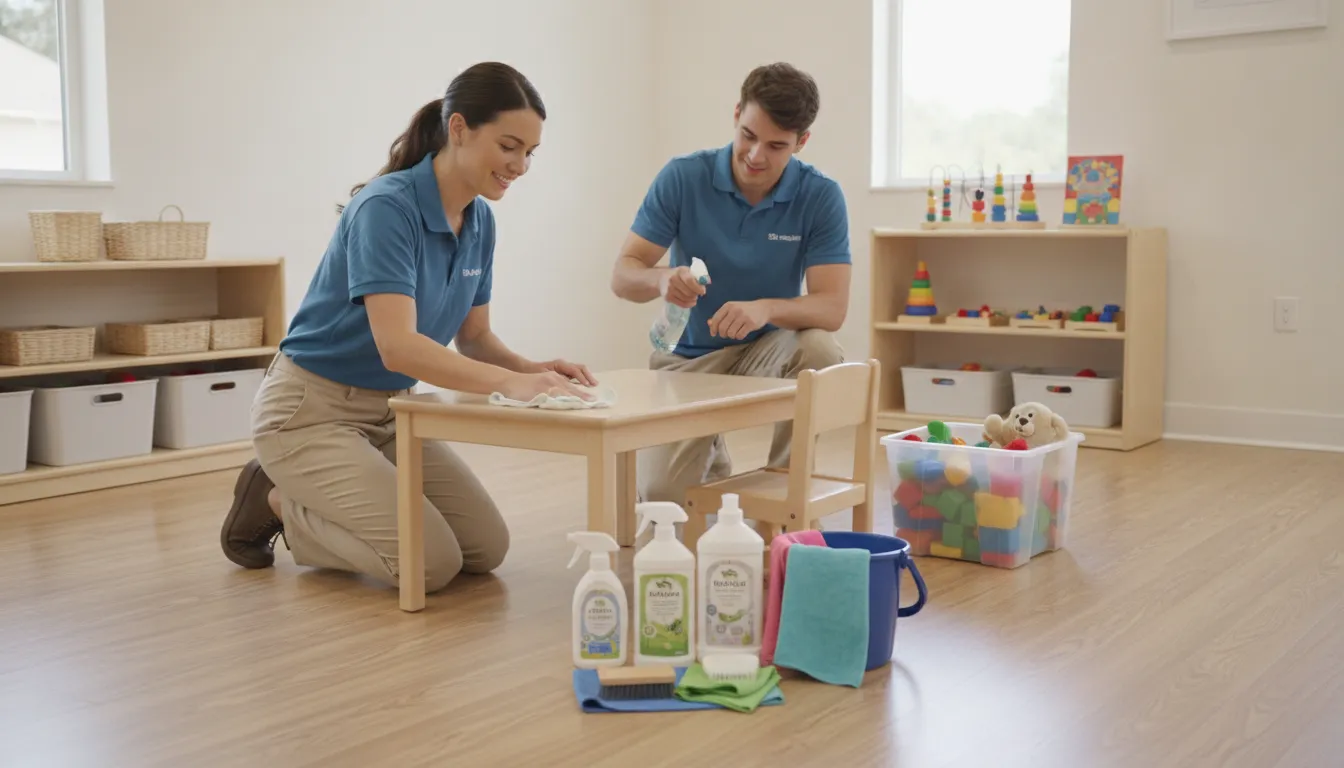
A daycare’s cleaning needs change from room to room and day to day. A lunch table, mouthed toy, bathroom fixture, and nap mat don’t all call for the same approach. Good daycare cleaning starts with a clear plan that matches each task to the surface, product, and frequency it requires. This guide helps you create that plan, from daily classroom checklists to monthly deep-cleaning tasks. It also explains how to store products securely, follow label instructions, and assess whether a professional service could support your staff. Use the guidance as a starting point, then confirm that your procedures meet your facility’s policies and local health and licensing rules.
Key Takeaways
- Set a clear cleaning schedule: Assign daily, weekly, monthly, and as-needed tasks based on room use, children’s activities, and facility procedures.
- Use products carefully: Clean surfaces before sanitizing or disinfecting when required, follow product labels, and keep chemicals away from children.
- Choose a daycare cleaning provider thoughtfully: Confirm the service scope, staff training, insurance, products, pricing, and quality checks before booking.
What Does Daycare Cleaning Involve?
Daycare cleaning is more than tidying up. It includes removing dirt and residue, then sanitizing or disinfecting surfaces when the task and facility procedures call for it. Toys, food areas, bathrooms, diaper stations, and sleep spaces each need attention suited to their use and the materials they contain.
A clear routine helps staff and cleaning professionals know what to clean, which products to use, and when an area is ready for children again. Many facilities schedule detailed cleaning after operating hours, so rooms can be cleaned without disrupting routines and surfaces can dry properly. A daycare cleaning service overview can help facilities identify the areas to include in a cleaning plan.
Clean first; sanitize or disinfect as needed
Cleaning removes dirt, food residue, and other visible soil from a surface. Sanitizing and disinfecting are separate processes used to reduce germs. In general, clean a surface before sanitizing or disinfecting it, since residue can interfere with the product’s intended use. The appropriate process depends on the surface and its purpose. A table used for meals, a shared toy, and a bathroom fixture may have different cleaning requirements.
Follow your facility’s procedures and the product label to determine whether sanitizing or disinfecting is needed. Pay attention to contact time, the period a surface must remain wet for the product to work as directed. Brightwheel’s guide to common childcare cleaning mistakes explains why confusing cleaning with disinfection or overlooking contact time can make a routine less effective.
Focus on toys, high-touch surfaces, food areas, bathrooms, diaper stations, and sleep spaces
Give extra attention to surfaces that children and staff touch often, including tables, door handles, light switches, faucets, and shared play equipment. Clean toys regularly, especially items children put in their mouths. Follow facility procedures for washing or sanitizing toys, and keep items that need attention out of circulation until they are ready to use again.
Food preparation and eating areas need cleaning between activities with products and methods suitable for food-contact surfaces. Use a separate, consistent routine for bathrooms and diaper-changing stations. Include cots, cribs, mats, and bedding, following facility rules for laundering and storage. A daycare cleaning service overview outlines common areas to consider when planning service for classrooms, restrooms, and sleep spaces.
Follow labels for contact time, dilution, ventilation, and protective gear
Read the label before using any cleaning, sanitizing, or disinfecting product. It specifies the surfaces the product is intended for, whether dilution is required, how long the surface must stay wet, and whether rinsing is needed. Follow these directions each time. Using too much or too little product, or wiping it off before the required contact time, may affect the intended result.
Check the label for ventilation instructions and any protective gear, such as gloves. Keep products in their original containers so directions and safety information are easy to find. For surfaces children may put in their mouths, check whether rinsing is required before the item returns to use. A consistent process helps staff use products as directed and reduces avoidable exposure.
Keep children away from chemicals and wet floors; never mix products
Keep children away from areas while cleaning is underway, and store products securely where children cannot reach them. Wet floors can create a slip risk, so use barriers or warning signs when appropriate and wait until surfaces are dry before children return. When practical, schedule detailed cleaning after operating hours to avoid disrupting activities and allow more time for surfaces to dry.
Never mix cleaning products. Combining chemicals can cause dangerous reactions or fumes. Use one product at a time, follow its label, and keep it separate from food, toys, and children’s belongings. Staff should know the facility’s procedures for spills or accidental exposure and follow the product’s instructions. Clear rules for storing and using cleaning supplies help keep routine tasks organized and children away from potential hazards.
Don’t mistake tidy surfaces for sanitized ones or use unsuitable disinfectants
A room can look tidy and still need cleaning. Straightening toys or wiping away visible crumbs does not necessarily remove germs, and using a general cleaner does not automatically sanitize or disinfect a surface. Use the process required for each area, and follow the product’s contact-time and rinsing instructions before children use the surface or item again.
Choose a product for the surface and task, not simply because it is on hand. A disinfectant may not be suitable for toys, food-contact surfaces, or items children put in their mouths. Check the label for approved uses and any rinsing directions, and follow your facility’s procedures. Questions to ask a daycare cleaning company include how it selects products and follows childcare hygiene protocols.
What Should a Daycare Cleaning Checklist Include?
A clear daycare cleaning checklist helps staff keep classrooms, bathrooms, food areas, and sleep spaces clean throughout the week. Organize tasks by how often they need attention, then tailor the schedule to your rooms, activities, and facility procedures. A busy playroom may need more frequent toy cleaning than a storage area, for example.
Make sure staff know which tasks require cleaning, sanitizing, or disinfecting. These steps are not interchangeable, so follow product labels and your facility’s illness-response procedures. Local health and licensing requirements also vary. The CDC’s child care cleaning guidance can help inform your routine, but confirm which rules apply to your program.
Daily: Clean tables, counters, sinks, floors, bathrooms, and diaper stations
Clean tables, counters, sinks, and chairs each day, and again when they’re visibly dirty or used for a different activity. For example, clean a table after meals before setting it up for crafts. Sweep or vacuum floors to remove crumbs and debris, then mop as needed. Keep children away from wet floors until they’re dry.
Give bathrooms and diaper-changing areas careful attention. Clean toilets, sinks, floors, and changing surfaces according to your facility’s procedures. Remove visible soil before applying sanitizer or disinfectant, and follow the product label. Store cleaning products securely, away from children, and wash hands after cleaning diaper stations or handling waste. The daycare cleaning checklist from Fortador also identifies tables, sinks, floors, bathrooms, and diaper-changing areas as daily priorities.
Daily: Sanitize toys and food-contact surfaces as directed
Clean food-contact surfaces after use, including tables, high-chair trays, counters, and utensils. If a surface needs sanitizing, use a product labeled for that purpose and follow its directions. Some products require rinsing before the surface is used for food again. Keep children away until the surface is ready for use.
Set a routine for toys based on how children use them. Clean toys that have been mouthed, dropped in a bathroom, or soiled with body fluids before returning them to play. Check the toy maker’s care instructions, since some materials may not tolerate certain products. Use a designated container for toys waiting to be cleaned, and let washed items dry completely before reuse. Fortador’s childcare cleaning recommendations advise following manufacturer directions when cleaning toys.
Daily: Disinfect suitable high-touch surfaces; clean cots, cribs, mats, and bedding
Include frequently touched surfaces in the daily routine, such as door handles, light switches, handrails, and shared equipment. First clean away visible dirt. Then disinfect when the surface, product label, and facility procedures call for it. Check how long the product must remain wet, and keep children away until the required contact time has passed and the area is safe to use.
Clean cots, cribs, and mats between uses or whenever they become soiled. Launder bedding according to your facility’s schedule, and make sure it dries fully before returning it to a sleep space. Store each child’s bedding separately in a clean, designated area. Fortador’s daycare cleaning checklist includes high-touch surfaces, sleep equipment, and bedding among routine cleaning tasks. Check local licensing rules for any specific requirements.
Weekly: Clean shelves, cubbies, books, soft toys, play equipment, and art supplies
Set aside time each week for areas that may not get much attention during daily cleaning. Wipe shelves, cubbies, bookcases, and play equipment, including handles and edges where dust or sticky residue can collect. Check books and art supplies for visible dirt, then clean them using methods suited to their materials. Remove damaged items that can’t be cleaned safely.
Wash soft toys and play clothes according to their care labels, and let them dry completely before returning them to the classroom. Keep clean items separate from those waiting to be washed. For shared supplies such as paintbrushes or dress-up accessories, follow manufacturer instructions and facility policies. Fortador’s childcare cleaning checklist includes books, cubbies, soft toys, play clothes, and art supplies among weekly tasks.
Weekly: Deep-clean restrooms and food areas; check and clean refrigerators
Use the weekly schedule to reach areas that daily cleaning may miss. Scrub bathroom fixtures and floors, including spots around toilets, under sinks, and along edges. In food areas, clean counters, sinks, cabinet fronts, and equipment according to manufacturer instructions and your facility’s food-safety procedures.
Check refrigerators for spills, expired food, and items that need to be removed. Clean shelves and drawers as needed with a product suitable for food-storage areas. Follow the label for rinsing and drying before returning food. Keep cleaning products away from food, dishes, and food-preparation tools.
Add a close inspection of changing tables and cribs, including areas under removable mats and pads. Fortador’s daycare cleaning guidance recommends deeper cleaning of bathrooms, activity areas, and hard-to-reach spots as part of a regular routine.
Monthly: Clean windows, blinds, curtains, baseboards, storage areas, and behind furniture
Monthly tasks help remove dust and debris from places that don’t need daily attention. Clean windowsills, blinds, curtains, and baseboards using methods that suit each material. Check storage areas for dust, spills, or clutter, and clean surfaces before putting items back. Keep children away from the work area, especially when moving furniture or using cleaning products.
Move lightweight furniture only when it’s safe to do so, and clean behind or beneath it. Ask for help with heavy items to avoid injury or damage to floors. Use this time to check for damaged furniture, loose parts, or items that need repair or removal. Add these jobs to a monthly calendar so they don’t get missed during busy weeks. Fortador’s daycare cleaning recommendations include windows, blinds, curtains, baseboards, and areas behind furniture.
As needed: Handle illness, spills, and contamination under facility procedures
Some messes need immediate attention rather than waiting for the next scheduled cleaning. Follow your facility’s procedures when a child is ill, bodily fluids are present, or a spill creates a slip risk. Keep children away from the affected area. Wear the protective gear required by facility policy and the product label, then clean and disinfect surfaces using the specified method.
Don’t mix cleaning products or use a disinfectant on a surface it isn’t intended for. Check the label for application instructions, contact time, ventilation, and rinsing requirements. If staff aren’t sure how to handle an incident, they should pause and ask the designated supervisor or health professional. Record the incident and any extra cleaning if facility policy requires it. If recurring cleaning needs are difficult for staff to manage, review Ziva Cleaning’s overview of daycare cleaning services when considering outside support.
Assign tasks, log completion, and follow local health and licensing rules
Make the checklist easy to use by assigning tasks to a specific role or shift. Use clear instructions that identify the room, surface, product, and frequency. Instead of writing “clean the classroom,” list the tables, sinks, floors, and other areas that need attention. Include a space to record when each task is complete and note issues that need follow-up, such as a broken dispenser or a surface that remains soiled.
Train staff on cleaning procedures and product labels, and keep the current checklist where everyone can find it. Review the schedule when room layouts, activities, products, or enrollment change. Store records according to facility policy and local requirements. Health and licensing rules vary, so confirm that your checklist meets the standards for your program. Brightwheel’s child care cleaning guidance also recommends assigning tasks and recording completion to support consistent routines.
How Do You Choose Safe Daycare Cleaning Products?
Choosing cleaning products for a daycare means protecting children while keeping surfaces hygienic. Start by identifying what needs attention and how children use the area. Cleaning removes dirt and debris; sanitizing reduces germs on surfaces; disinfecting targets specific germs listed on a product’s label. A product that works on a floor may not be suitable for a toy, high chair, or counter where food is prepared. Match the product to both the surface and the task, and follow the label every time.
Before introducing a product, review its directions and safety information with staff. Check whether it needs to be diluted, how long a surface must stay wet, whether rinsing is required, and what protective equipment or ventilation to use. Keep children away from products and treated areas as directed. A daycare-focused cleaning service guide can help you consider product suitability, documentation, and children’s exposure.
Keep a current list of approved products and the tasks for which staff may use them. Store labels and Safety Data Sheets where staff can access them, and update your procedures when a product or requirement changes. Local childcare rules may set additional requirements, so confirm your facility’s practices with the relevant licensing agency or a qualified health professional.
Match each product to the surface and task
Check the label to make sure a product is intended for the surface you plan to treat. A floor cleaner may not be appropriate for food-contact counters, toys, or items children put in their mouths. Choose a product according to the job: cleaning, sanitizing, or disinfecting. These steps serve different purposes, and one product should not be assumed to do all three unless its label says so.
Consider the surface material as well. Some products can damage finishes, fabrics, or equipment. Follow any instructions about rinsing, especially for food-contact or mouth-contact surfaces. A simple product chart can help staff work consistently: list each product, the surfaces it is approved for, and the steps for safe use. This daycare cleaning overview discusses why childcare facilities need products suited to their specific tasks.
Check labels and safety data; verify EPA registration for disinfectants
Read the entire label before using a product, including directions, precautions, first-aid information, dilution instructions, and storage guidance. Keep the Safety Data Sheet, or SDS, accessible to staff so they can review handling and hazard information. For a disinfectant, check that it has an EPA registration number and that the label covers the intended surface and germs. The EPA explains how to read pesticide product labels, which provide essential directions for use.
Registration does not mean a disinfectant is suitable for every surface or situation. Follow the specific label, and don’t assume products with similar names or ingredients have identical directions. Keep a record of products used in the facility, including label instructions and SDS information. Review the record when you change brands or procedures, and make sure staff know where to find the latest information.
Consider ingredients, signal words, fragrance, and child exposure
Review the ingredients and signal word on each label. Terms such as “Caution,” “Warning,” and “Danger” communicate information about a product’s hazards, but they do not replace the directions for safe use. Consider how children might be exposed: they may touch treated surfaces, breathe vapors, or put toys and other items in their mouths.
Fragrance-free or low-residue products may be a good fit for some daycare tasks, but those features alone do not confirm that a product is suitable. Check the label to verify its intended use and whether the surface needs rinsing before children use it again. Plan product use for times and areas that limit children’s exposure, while following all label instructions. This daycare cleaning guide offers more context on product selection and child exposure.
Follow directions for contact time, rinsing, ventilation, and protective gear
Use the exact dilution and application method on the product label. If a disinfectant requires a surface to stay wet for a set contact time, keep it visibly wet for the full period. Wiping it dry too soon may prevent the product from working as directed. Rinse surfaces when the label says to, especially items children may touch or put in their mouths.
Follow directions for ventilation and protective equipment, and keep children away from the area until the label says it is safe to return. Never mix cleaning products, since some combinations can create hazardous fumes or reactions. Staff should also know when a surface needs cleaning before sanitizing or disinfecting. The childcare cleaning guidance highlights common mistakes, including skipping contact time and confusing cleaning with disinfecting.
Store products securely and out of children’s reach
Store cleaning products in their original, clearly labeled containers, in a locked cabinet or another secure area children cannot access. Keep them separate from food, medication, and personal items. Never pour a product into an unlabeled bottle or a container that could be mistaken for food or a drink.
Set a clear routine for putting products away immediately after use, and make sure staff know where each item belongs. Check containers for leaks, damage, or missing labels, and follow manufacturer instructions for disposal. Keep product directions and emergency information available to staff. Secure, consistent storage makes it easier for everyone to follow the facility’s safety procedures and helps reduce the risk of accidental exposure.
Confirm requirements with licensing agencies or qualified health professionals
Requirements for daycare cleaning can vary by location, facility type, and the surface being treated. Check with your licensing agency or local health department about rules for cleaning, sanitizing, disinfecting, product storage, and recordkeeping. If you are unsure whether a product or procedure is appropriate, ask a qualified health professional before making a change.
Keep written procedures easy for staff to find, and specify which products are approved for each task. A professional cleaning provider should be able to explain its products, training, and processes, but your facility should still confirm that its practices meet local requirements. When speaking with a provider, ask how its approach accounts for daycare-specific needs. This guide to questions for a daycare cleaning company can help you prepare.
How Often Should You Schedule Professional Daycare Cleaning?
There isn’t one schedule that works for every daycare. The right frequency depends on enrollment, how many rooms are used, daily foot traffic, and activities that create extra mess, such as meals, sensory play, and outdoor time. A busy center with several classrooms may need more frequent professional service than a smaller program with fewer children and shared spaces.
Professional cleaning works alongside the daily cleaning tasks staff perform. Your team can manage routine spills and follow facility procedures for toys, food-contact surfaces, and bathrooms, while a cleaning service handles agreed-upon tasks on a regular schedule. The schedule should reflect how your facility operates, rather than rely on a standard package alone.
Start by reviewing which areas need the most attention and how well your current routine is working. Document completed tasks, ask staff where recurring issues arise, and adjust the service plan when enrollment, room use, or activities change. Local health and licensing rules may also shape your cleaning procedures, so check the requirements for your program. Ziva Cleaning’s daycare service overview also identifies facility size, room use, and staffing needs as factors to consider when planning professional service.
Set frequency based on enrollment, room use, traffic, and activities
Consider how often each area is used when setting a cleaning schedule. Classrooms, bathrooms, food-preparation areas, diaper stations, and shared play spaces may need more frequent attention than rooms used occasionally. The number of children and staff passing through an area matters, as do activities that lead to spills or bring dirt indoors.
Ask staff to note where messes and cleanliness concerns tend to recur. If a room is difficult to maintain between professional visits, discuss whether the service should happen more often or cover additional tasks. Reassess the plan when enrollment changes, a classroom is added, or the daily schedule shifts. This keeps the cleaning routine connected to the way children and staff actually use the facility.
Pair daily staff cleaning with scheduled professional service
Staff should handle routine cleaning throughout the day, including spills and tasks covered by the facility’s procedures for toys, food-contact surfaces, and bathrooms. A professional service can complement that work by cleaning agreed-upon areas such as classrooms, shared spaces, and floors on a regular schedule.
Write down which tasks belong to staff and which are included in the cleaning service. A shared checklist helps prevent missed work and makes responsibilities clear. Some facilities also arrange daytime support for spill response or restroom checks, while scheduling most professional cleaning before opening or after closing. Ziva Cleaning describes how some centers combine daytime assistance with cleaning outside operating hours.
Arrange extra cleaning after illness, spills, or contamination
Your regular schedule may need an adjustment after an illness outbreak, a significant spill, or another contamination incident. Follow your facility’s procedures to identify affected areas and determine whether surfaces need cleaning, sanitizing, or disinfecting. Make sure staff and the cleaning provider understand their roles, so everyone knows what to do when extra service is needed.
Tell the provider which rooms and surfaces are involved, and share any relevant product or facility requirements. Cleaning products must be used according to their labels, including directions for contact time and any rinsing or protective equipment. My Brightwheel’s childcare cleaning guide explains why cleaning and disinfecting are different tasks and why following product directions matters.
Compare service costs with in-house labor, training, equipment, and supplies
Compare the full cost of professional cleaning with the time and resources required to handle the work in-house. Include staff hours, training, equipment, supplies, and the time needed to supervise and document tasks. Also consider whether cleaning duties take staff away from their childcare responsibilities or are difficult to complete consistently.
Ask for a quote that clearly lists the tasks, products, visit frequency, and any additional charges. Then compare it with the actual cost of your current approach, rather than looking only at the price of supplies or a single service visit. Professional cleaning may be worth considering when staff need support across several rooms or the existing routine isn’t being completed reliably. Ziva Cleaning’s overview highlights staff time, equipment, and consistency as useful points in that comparison.
Schedule after hours when practical; adjust based on staff feedback and quality checks
When it fits your operations, schedule professional cleaning before the daycare opens or after it closes. An empty facility gives cleaners space to work and helps keep children away from cleaning products and wet floors. It also gives surfaces time to dry and allows products to remain on surfaces for the contact time stated on their labels.
After each visit, ask staff whether rooms are ready for use and whether any recurring issues remain. A checklist or periodic walkthrough can help confirm that the agreed tasks are being completed. If staff notice a missed area or a change in how a room is used, review the schedule and scope with the provider. Some facilities also arrange daytime help for immediate needs, as Ziva Cleaning notes.
What Should You Expect from a Daycare Cleaning Service?
A daycare cleaning service should offer more than a general cleaning routine. Its plan should reflect your rooms, operating hours, children’s activities, and the cleaning tasks your staff already handle. Before booking, ask what the service includes, who will perform the work, and how the company checks that tasks are complete.
Use the questions below to compare providers and set clear expectations. Confirm any health and licensing requirements with your local licensing agency, since rules can vary by location.
Request a facility-specific scope for classrooms, shared spaces, kitchens, and restrooms
Ask for a written scope based on your facility’s layout and daily routines. A classroom, infant room, kitchen, restroom, and staff office each have different cleaning needs. The plan should name the areas covered and list the tasks for each, such as wiping tables, cleaning floors, emptying trash, and servicing restrooms.
Include shared spaces, entryways, nap areas, and food-preparation zones. Ask how the company will adapt the plan if enrollment, room use, or activities change. A daycare cleaning service overview can help you prepare questions, but the final scope should be specific to your facility. Before signing, check that the listed tasks match your expectations and identify anything that costs extra.
Verify staff training, vetting, and insurance
Ask how the company trains cleaners to work in childcare settings. They should understand how to use products safely, follow your facility’s procedures, and distinguish routine cleaning from sanitizing and disinfecting. Find out whether staff receive instructions about your rooms, access rules, and any areas that require special care.
Ask whether employees are background-checked and insured, and how the company manages keys, entry codes, and access during or after operating hours. Requirements for workers at licensed childcare facilities vary, so confirm local rules with your licensing agency. This list of questions for daycare cleaning providers can help you assess a company’s training and safety practices. Request documentation of insurance and any screening or training relevant to your facility.
Ask how the service handles high-touch surfaces, toys, and sanitizing or disinfecting
Ask which frequently touched surfaces the cleaners cover, including door handles, faucets, light switches, tables, and shared play equipment. Find out how they handle toys, particularly items children may put in their mouths. The approach should account for the item’s material and the product label, including whether the surface needs rinsing.
Cleaning removes dirt and residue, while sanitizing or disinfecting may be needed for particular surfaces or situations. Ask which products the team uses, how long surfaces must stay wet, and when children can safely return to the space. Many providers schedule daycare cleaning after hours to allow surfaces to dry and products to meet contact-time directions. This daycare cleaning guide explains why timing and product instructions matter.
Compare pricing, quality checks, flexible scheduling, and service guarantees
Compare the work included in each quote, not just the total price. A lower price may cover fewer rooms or tasks. Ask how the company checks completed work, records missed items, and responds when something needs attention. A clear process for inspections and follow-up helps you address concerns consistently.
Check whether the schedule works around your operating hours, holidays, and special events. Ask how much notice is needed to change a visit and whether the company can adjust service if your needs change. Find out what a service guarantee covers and how to request a re-clean. When comparing estimates, consider the tasks, staff training, equipment, and supplies included. This overview of commercial cleaning costs and quality can help you weigh price alongside the consistency of service.
Ask which tasks, products, and supplies are included and how the service handles licensing requirements
Get a clear list of what the price covers. Ask whether cleaners bring their own products and equipment, and whether they restock soap, paper towels, or other supplies. Confirm whether laundry, dishes, interior windows, and toy cleaning are included or billed separately.
Request product names and labels so your director can check them against facility policies and local requirements. Ask how the team handles products that require rinsing, ventilation, or secure storage, and whether cleaners can follow your written procedures. Requirements may differ by location, so confirm expectations with your licensing agency. Products should be suited to the surface and task, particularly where children eat, play, or put objects in their mouths. This daycare cleaning resource offers guidance on choosing products for childcare spaces.
Request a detailed quote and ask about booking options, packages, and promotions
Request an itemized quote that lists the rooms, tasks, visit frequency, products, and supplies included. Ask what affects the price, such as facility size, number of rooms, visit length, or an initial deep clean. Check for additional charges for urgent visits, extra tasks, or service outside the agreed schedule.
Ask how booking works, how much notice the company needs for changes, and whether you can choose a recurring plan or one-time visit. If packages or promotions are available, compare their terms with the scope your facility needs rather than choosing by price alone. For online booking, confirm that you can share facility-specific instructions before the first visit. A detailed quote gives you a practical basis for comparing providers and clarifying expectations before service begins.
Related Articles
- What Are Daycare Cleaning Services?
- Common Cleaning Mistakes in Childcare Programs
- Cleaning at Childcare Centers: Checklist and Recommendations
- What Questions Should You Ask Before Hiring a Daycare Cleaning Company?
- Busting Common Myths About Commercial Cleaning
Frequently Asked Questions
How is cleaning different from sanitizing and disinfecting? Cleaning removes visible dirt and residue. Sanitizing and disinfecting are separate steps used when needed to reduce germs. Clean the surface first, then follow the product label and your facility’s procedures for the next step.
How often should a daycare receive professional cleaning? It depends on how many children use the space, which rooms are in regular use, and how much traffic and activity they get. Many facilities combine daily staff cleaning with scheduled professional visits, then adjust the plan as needs change.
Which areas need the most attention in a daycare? Prioritize bathrooms, diaper-changing stations, food areas, shared toys, high-touch surfaces, floors, and sleep equipment. The right routine depends on how each area is used and your facility’s health and licensing requirements.
How can a daycare choose cleaning products safely? Choose products labeled for the specific surface and task. Follow directions for dilution, contact time, rinsing, ventilation, and protective gear. Store products securely in their original containers, and never mix them.
What should a daycare ask before hiring a cleaning service? Request a written list of included rooms and tasks, and ask about staff training, screening, insurance, products, scheduling, quality checks, and extra fees. Confirm that the provider can follow your facility’s procedures and applicable local requirements.
For ongoing cleaning support in a childcare facility, explore our commercial cleaning services.